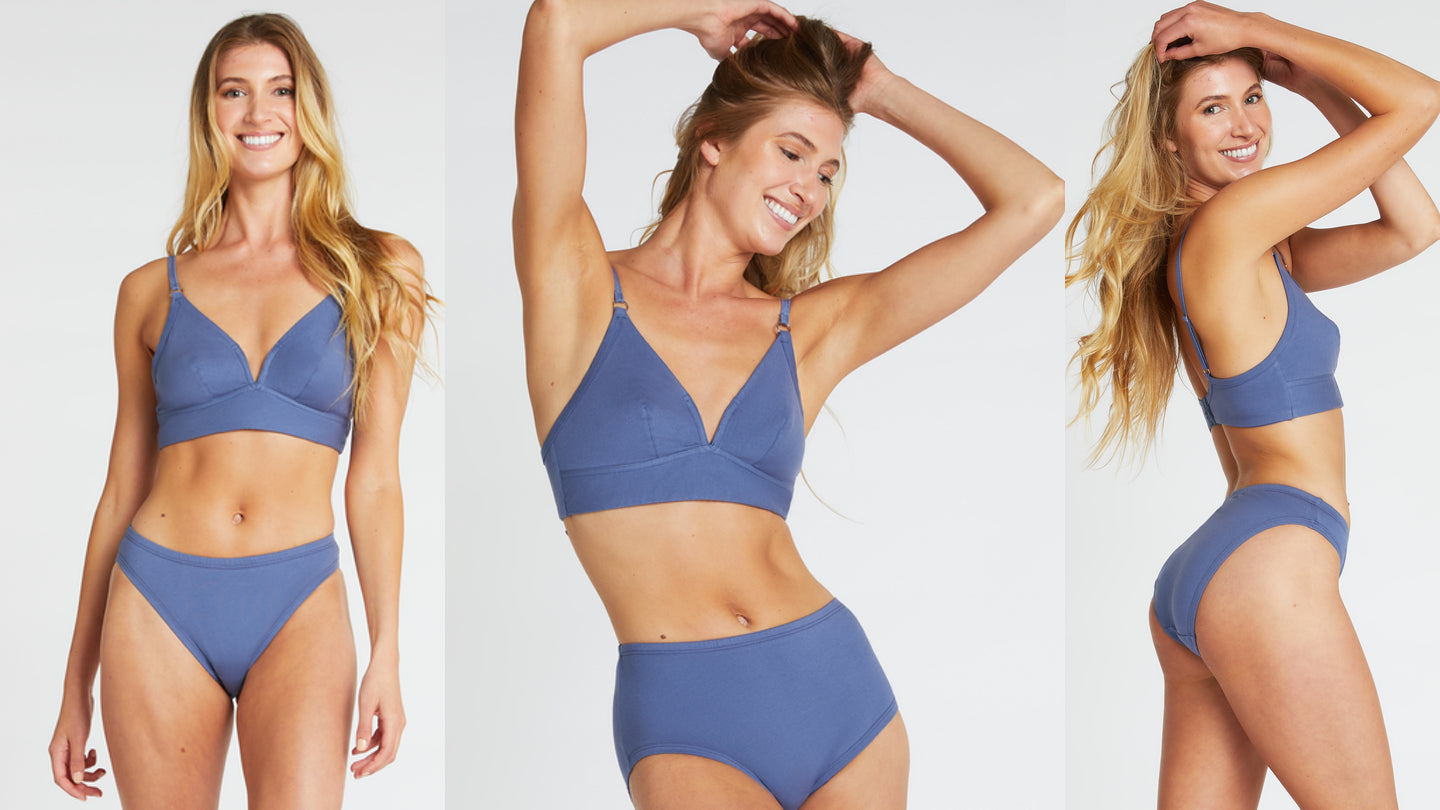
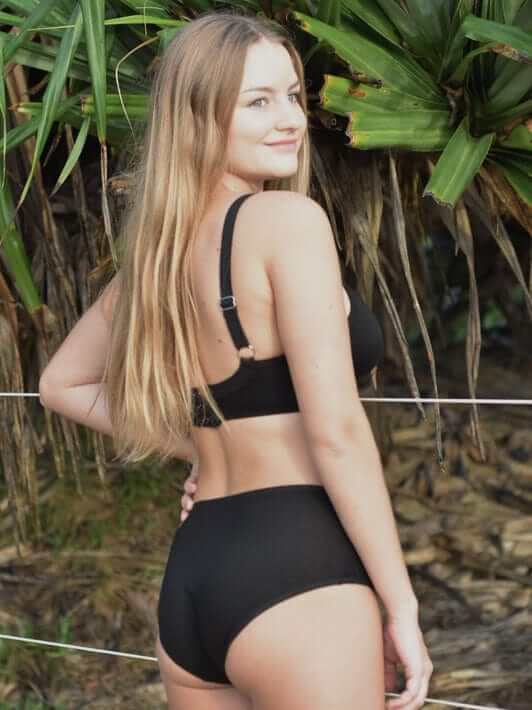
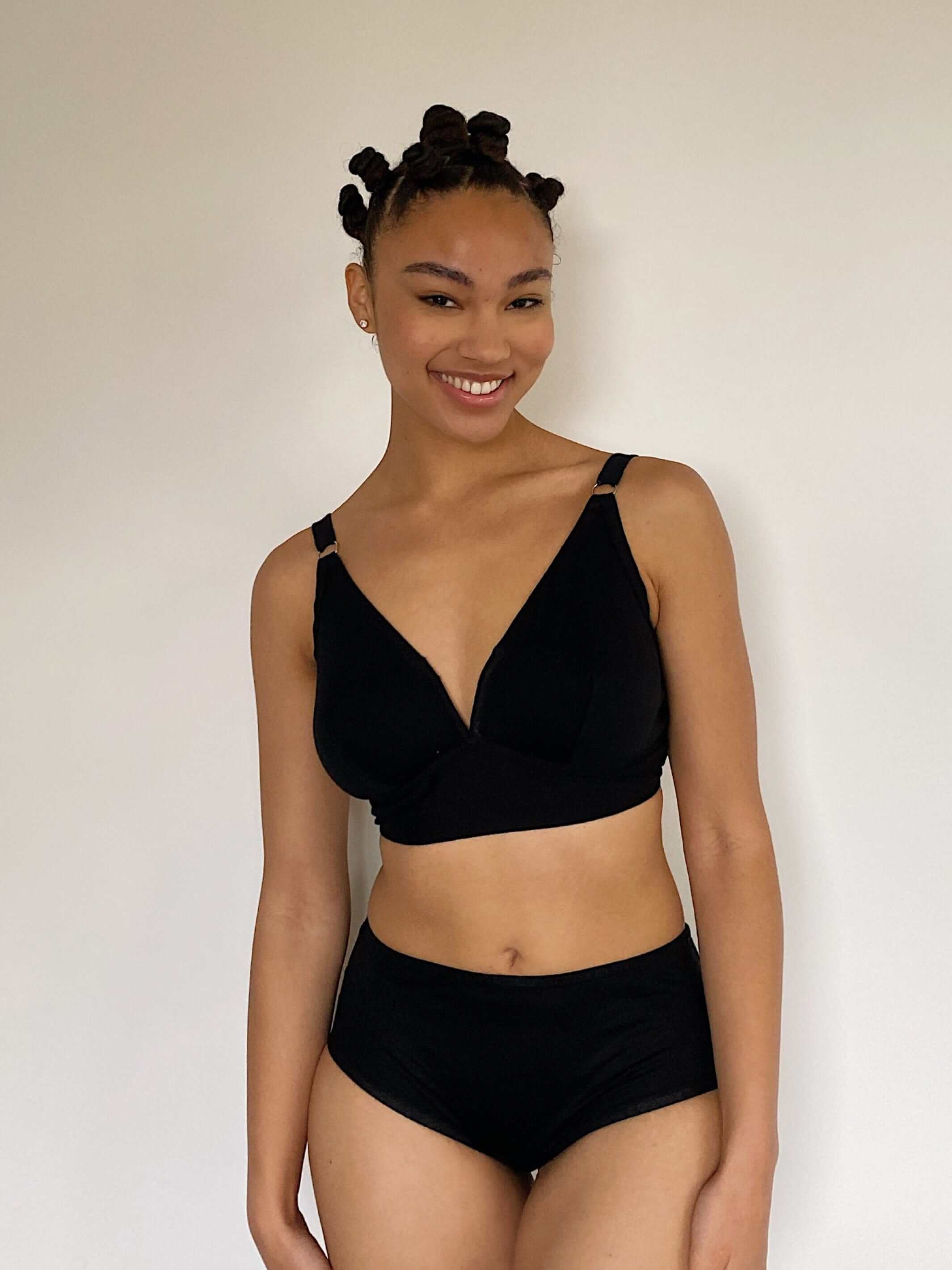

The thing women in D, DD, E, F or G cup hear most often when they say they are interested in a wire-free bra is some version of "but you need the support". The thing they hear less often is that the support comes from the band, not the wire. A well-designed wire-free bra holds a larger bust just as well as an underwire bra, and usually with more comfort.
The problem is that "well-designed" is doing a lot of work in that sentence. Most wire-free bras on the market have been built around small busts, and a quick switch from a wired E cup to a basic bralette will not work. What follows is the realistic guide to wire-free for fuller busts: what actually holds a larger bust up, what to expect on a typical day, and which of our styles work for D cup and above.
Why wire-free works for larger busts (when designed properly)
Underwire bras lift and shape larger busts using the wire as the main structural element. Wire-free bras achieve the same support through three different mechanisms working together.
A wider, firmer band. The band carries the weight. For larger busts, the band needs to be wider (typically 4 to 5 centimetres rather than the 2 to 3 centimetres common in smaller-bust bras) and firmer in tension. This is the single most important structural element for support.
A structured cup with proper shaping. Wire-free does not mean shapeless. The cup is cut and stitched to follow the natural shape of the breast, with darting or panelling that creates lift without requiring a wire. Done well, the silhouette is similar to a wired bra. Done badly, the bust droops or splays.
Wider straps. Larger busts need straps that distribute weight across more of the shoulder. Thin spaghetti-style straps cut in and slip. Wider straps stay in place and remove the digging that smaller-bust wire-frees can ignore.
When all three are present, the wire becomes redundant. When any one is missing, the bra fails to support and women fairly conclude that wire-free does not work for them. It does. It just has to be the right wire-free.
What TVGB does for D cup and above
Our V for Victory range is designed specifically with fuller busts in mind. The styles in Latte, Rum & Raisin, Black and Vintage Peach include wider straps as standard. The cup is structured with internal seaming that lifts and supports without compression. The band is wide and firm.
For F and G cup specifically, we now produce select styles in those sizes. Latte, Rum & Raisin and Vintage Peach V for Victory bras extend to 36/14 in F and G cup. The continuous sizing across band and cup means the support stays consistent at larger sizes.
We are still working on extending the range further. Our current limit is 38/16E because of the structural challenge of providing wire-free support without spandex at very large sizes. As we find solutions for the spandex substitute, the range will continue to grow. We get more emails about this than about almost any other topic, and we are working on it.
The fabric question for fuller busts
Larger busts trap more heat and moisture under the band, which makes fabric choice more important rather than less. Synthetic fabrics that are tolerable at A or B cup become miserable at E or F cup. The skin under the breast and along the band gets sweaty, irritated, and prone to rash.
100% organic cotton or TENCEL at this size does noticeable work. The fabric breathes, regulates moisture, and stops the under-bust irritation that most fuller-busted women have come to assume is just part of having larger breasts. It is not. It is the bra. Our 100% organic cotton range is the cleanest version of this.
Adjusting from underwire to wire-free at D cup and above
If you have worn underwire for years (which most fuller-busted women have), the first few days in a wire-free bra will feel different. Your ribcage and shoulders have adjusted to wire pressure for so long that the absence of pressure can feel "unsupported" even when the bra is doing its job.
Give yourself a week. By day five or six, the bra should feel right rather than novel. The visual silhouette will be slightly softer than what you are used to, because wire-free does not push the breast tissue forward and up the way wire does. This is your real shape rather than the bra failing.
If at the end of a week the bra still feels wrong, check the size. Wire-free and spandex-free fits differently from wired bras, and the band in particular will feel firmer than your wired equivalent. Our team is happy to help by email if you want a hand sizing, we answer all sizing questions ourselves.
What to expect on a typical day
A properly fitted wire-free bra at D cup or above should:
- Hold its position throughout the day without riding up at the band
- Lift and support the bust without compression
- Remain comfortable through 12 to 18 hours of wear
- Cause no rubbing, digging or pinching
- Leave no red marks at the band or under the breast at end of day
- Disappear within the first hour, in the sense that you stop noticing it
If any of these fails, the bra is the wrong size or the wrong style. The fix is rarely "you need a wire". The fix is usually a different cup shape, a wider band or a smaller band size. Our size guide covers measurement and the continuous-sizing chart for fuller busts.
What about high-impact sport?
Everyday wire-free works for low-impact movement (walking, errands, light exercise). High-impact sport (running, jumping, court sports) needs a dedicated sports bra, which is a different category and usually involves compression rather than structured cups.
Our bras are designed for daily wear rather than sport. For active days, a high-impact natural fibre sports bra is the appropriate piece, and that conversation is separate. The current sports bra category is heavily synthetic, which is its own problem, we have written about that in our piece on the dirty truth about sports bras.