

The conversation about microplastics has moved quietly from oceans to bottled water to bloodstreams. Microplastics have now been found in human placentas, new borns, breast milk and umbilical cord blood. A 2024 study published in Toxicological Sciences reported that researchers detected microplastic particles in 100 per cent of placentas tested. The question that follows is where the exposure is coming from, and what (if anything) a pregnant woman can reasonably do about it.
Clothing turns out to be one of the bigger sources, and underwear sits at the top of that list because it is in continuous contact with the most permeable skin on the body. For most of us this is mostly an environmental concern. During pregnancy, it becomes a personal one.
How microplastics get from clothing into the body
Synthetic fibres (polyester, nylon, elastane) shed microscopic particles every time they are worn and washed. The shed during washing ends up in waterways. The shed during wear ends up against the skin and, particularly in areas of high permeability or perspiration, can be absorbed.
The skin around the breasts and the vulvar tissue is more permeable than skin elsewhere. During pregnancy, both areas are also undergoing rapid blood-flow and hormonal changes that increase absorption. The combination means a synthetic bra and synthetic underwear during pregnancy contribute to microplastic exposure at higher rates than they would otherwise.
The placenta does not filter these particles out the way it filters many other compounds. Recent research has detected microplastics crossing the placenta and reaching the foetus. The mechanisms are not fully mapped, but the exposure pathway is now confirmed.
Why pregnancy is the moment this matters most
Microplastics carry chemical hitchhikers. Among them are endocrine disruptors like BPA, which mimic oestrogen in the body and have been linked to hormonal and developmental effects. Pregnancy is the life stage where the body is most sensitive to small inputs and the consequences of exposure are amplified, both for the mother and for the developing baby.
The science is still being mapped, and most studies are observational rather than cause-and-effect. But the precautionary principle applies cleanly here: during pregnancy, when exposure has more consequence, reducing avoidable synthetic contact is a sensible move. The same applies through breastfeeding, when microplastic concentrations in breast milk track maternal exposure during lactation.
The bra question, specifically
Pregnancy bras are particularly worth thinking about because pregnancy changes the breasts so dramatically. By the second trimester, most women have gone up at least one band size and one or two cup sizes. The temptation is to pick up the cheapest "maternity bras" available, which are almost universally synthetic.
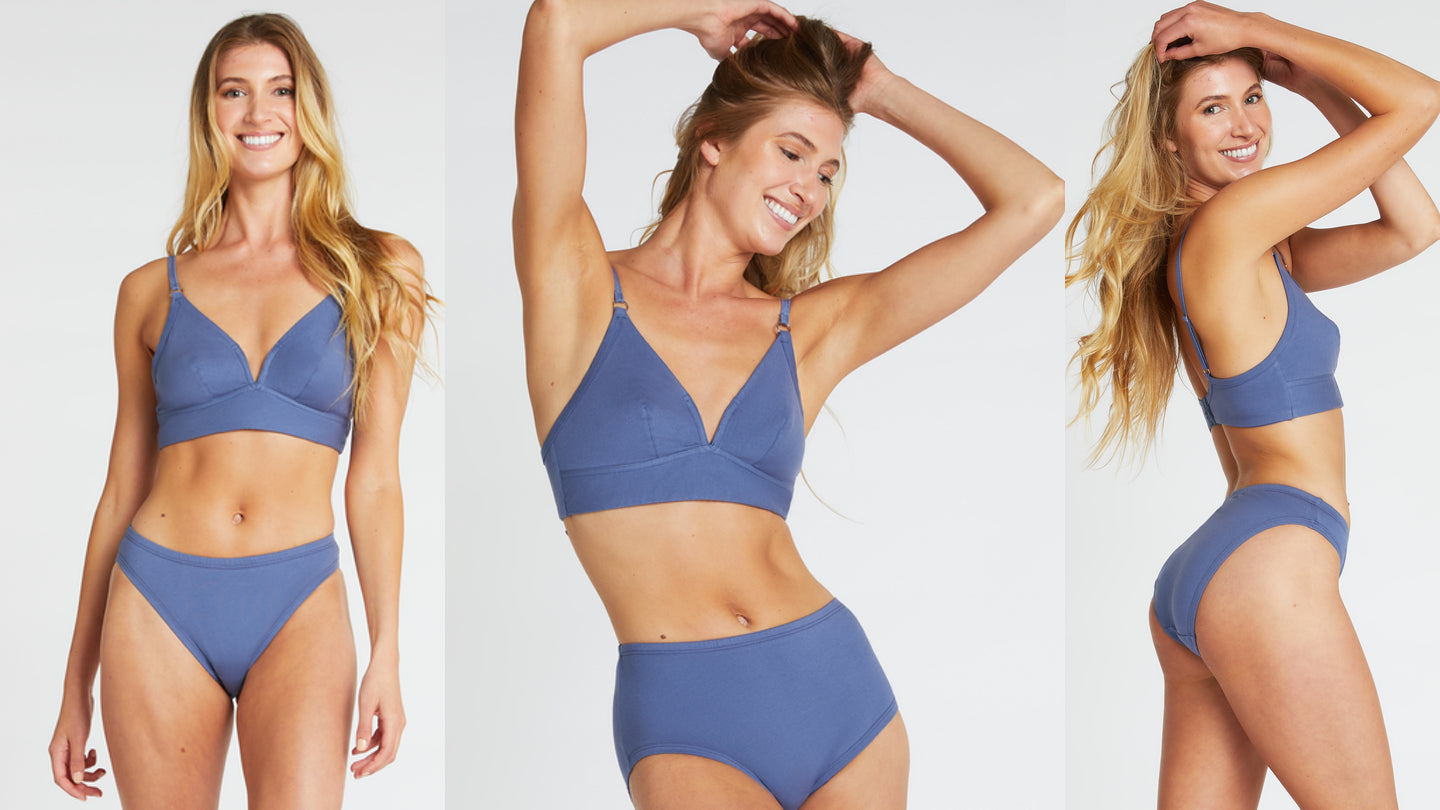
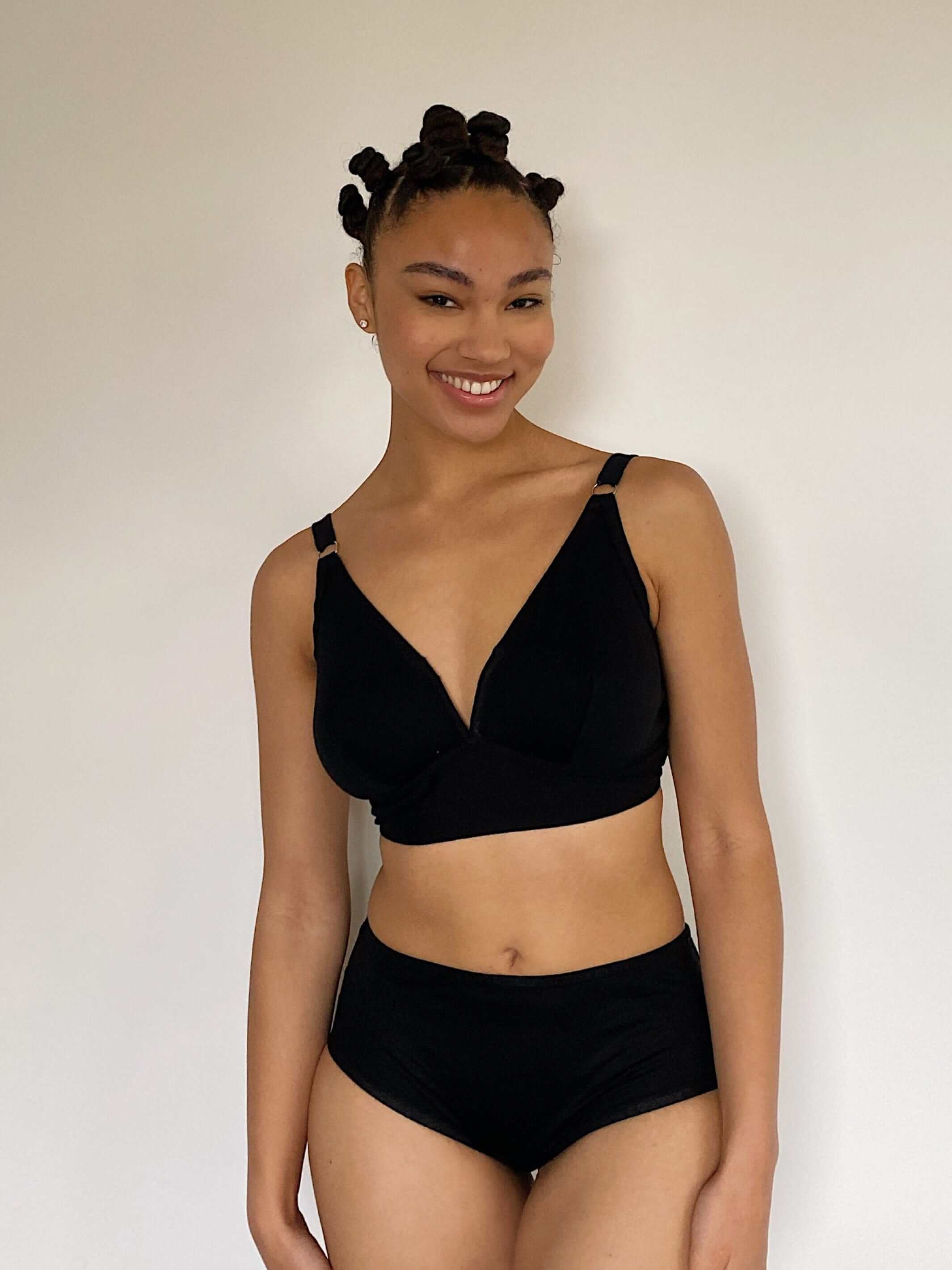
A natural fibre wire-free bra in 100% organic cotton or TENCEL removes the synthetic shedding entirely. It also tends to be more comfortable through the body changes of pregnancy, because natural fibres breathe and accommodate fluctuations better than synthetic fabric does. Our nursing bras are made from 100% organic cotton with natural rubber elastic and cellulose thread, no synthetic anywhere.
The same applies to underwear
Pregnancy underwear is often even more synthetic than pregnancy bras. The "maternity briefs" sold in most chains are nylon and elastane, sometimes with a thin cotton lining at the gusset. For all the reasons that matter most during pregnancy, skin sensitivity, hormonal change, microplastic exposure, breathability, synthetic underwear is the worst possible choice for the next nine months.
100% organic cotton or TENCEL briefs, ideally with natural rubber elastic, solve the issue without complication. They are also more comfortable during the bloating, water retention and skin sensitivity that come with pregnancy. Our plastic-free underwear range covers everyday and bigger-cut briefs.
Practical things to do this trimester
If you are pregnant and want to reduce synthetic contact without changing your entire wardrobe, the highest-impact swaps are:
- Replace your most-worn bras with 100% natural fibre wire-free options as you size up
- Replace your everyday briefs with organic cotton or TENCEL as your old ones wear out
- Switch sleepwear to natural fibre, particularly during the third trimester when sleep gets harder
- Avoid fabric softener on anything that touches your skin during pregnancy
- Wash new natural fibre garments once before wearing, to remove any manufacturing residue
- Skip activewear made from polyester and elastane where alternatives exist, a soft cotton singlet often works for low-impact movement
You do not need to overhaul everything. The bra and the briefs are the two pieces that sit closest to permeable skin for the most hours of the day, and they are where the change is most worth making.
What about postpartum and breastfeeding?
The same principles extend through postpartum recovery and breastfeeding. Skin can be more sensitive than usual, particularly around the abdomen and breasts. The body is recovering from significant physical change. Comfort matters, and synthetic fabric makes most postpartum days harder.
For breastfeeding specifically, a wire-free natural fibre nursing bra avoids the duct compression that underwire can cause and reduces the heat and moisture build-up that contributes to mastitis. A simple drop-cup nursing bra in organic cotton is a more useful piece of kit than the elaborate synthetic options often marketed to new mothers. We have written more about this in our piece on the best bras for sensitive skin, which applies equally to postpartum bodies.
The bra wardrobe most pregnant women actually need is small and natural fibre. Three nursing bras, two shelf-bra singlets, three to five pairs of organic cotton briefs. That is the whole list. Everything else is accumulation.