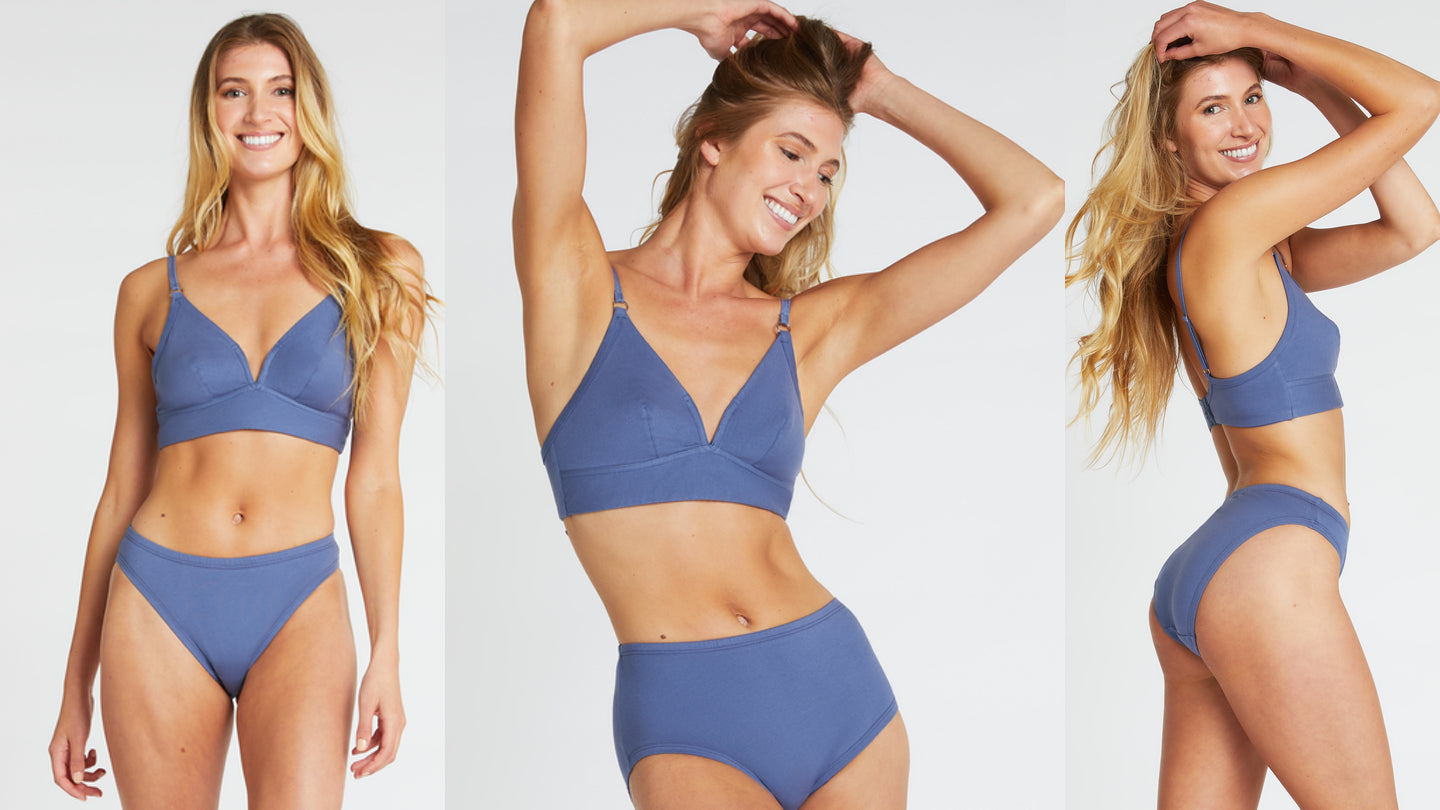

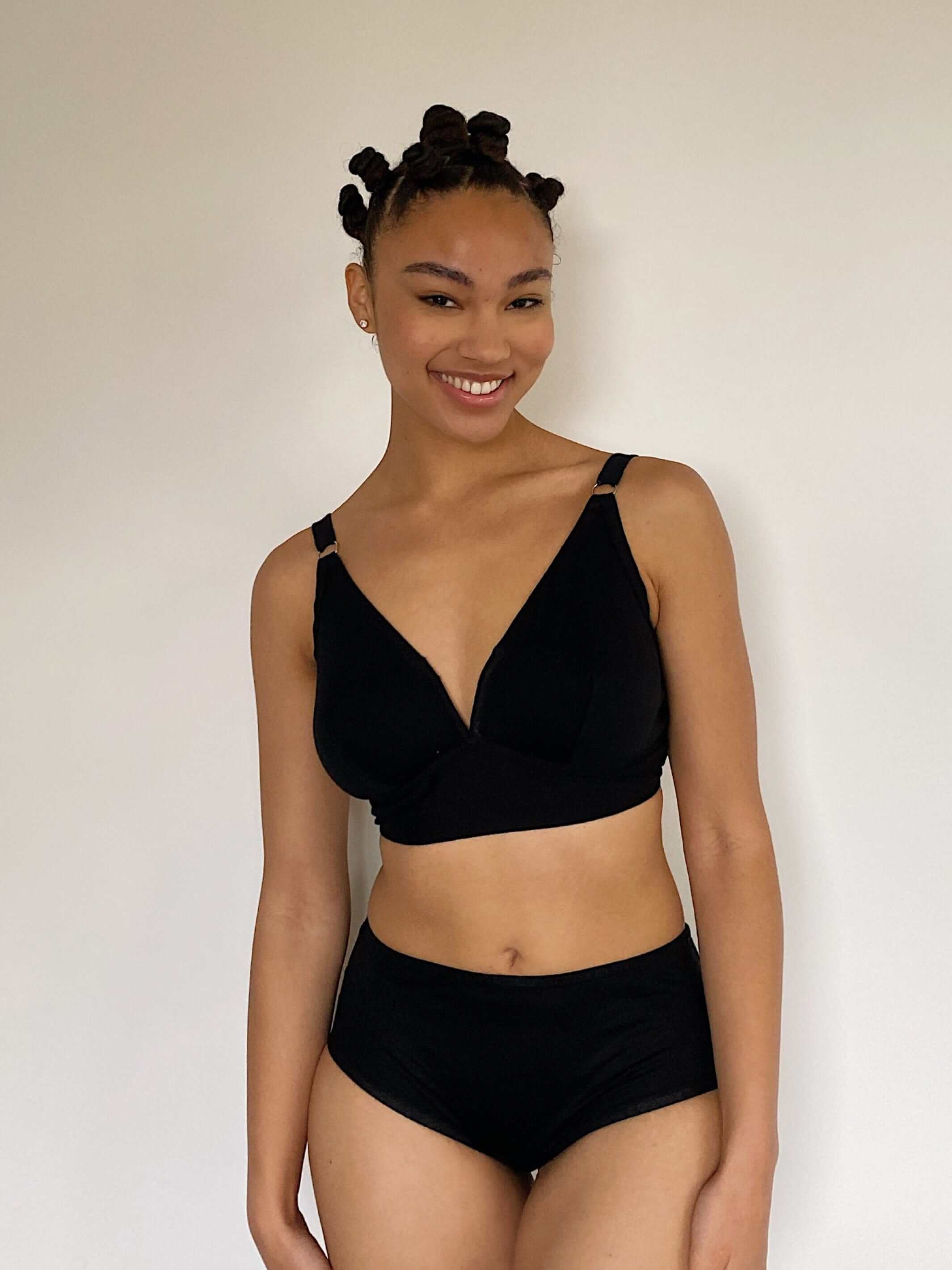

Most women have at least one pair of "favourite" underwear in the drawer that they reach for instinctively, and at least one pair that gets pushed to the back because it itches, slips, or feels wrong by lunchtime. The difference between the two pairs is almost always the fabric. The favourite is usually cotton. The avoided one is usually synthetic.
The reason cotton wins is not nostalgia. It is that cotton breathes, regulates moisture and behaves predictably against the skin. Organic cotton goes a step further by removing the chemical residues that conventional cotton can carry. For everyday underwear, this is the cleanest, simplest fabric choice you can make.
Why fabric matters more for underwear than for any other clothing
Underwear is in continuous contact with some of the most absorbent skin on the body. The vulvar tissue is more permeable than skin elsewhere, which means residues from underwear can be absorbed at higher rates than residues from a t-shirt or pair of jeans. The fabric is also against the skin for the entire day, every day, which compounds even small irritants.
Add to this the moisture and heat that naturally sit in the underwear area, and the fabric needs to do three things well. Breathe. Regulate moisture. Resist the chemistry that often shows up in synthetic clothing. Cotton (organic specifically) does all three.
What "organic" actually means here
Organic cotton is grown without synthetic pesticides, herbicides or fertilisers. The seeds are non-GMO. The processing is done without the chemical finishes commonly used on conventional cotton, formaldehyde-based softeners, chlorine bleaches, certain dye chemistries.
The practical result is fabric that has not been chemically loaded at any stage. Conventional cotton, by contrast, can carry residues from any of those processing steps, even after multiple washes. For most skin, the difference is small. For sensitive skin, eczema-prone skin, or skin during pregnancy, the difference becomes noticeable. Look for GOTS certification on the label, which verifies the organic processing claim from farm to factory.
The breathability advantage
Cotton fibres are naturally absorbent and porous. Air moves through the fabric and moisture moves out of the fabric, both faster than synthetic alternatives. The result is underwear that does not trap heat against the skin and does not create the warm, damp environment where irritation, fungal infection and bacterial overgrowth thrive.
Most "yeast infections" attributable to underwear are environmental rather than infectious in origin. The fabric created the conditions, and the natural flora that already lives on the skin took advantage of them. Switching to organic cotton underwear resolves a striking proportion of these recurring issues, simply by changing the fabric environment. Several gynaecologists in Australia and the UK have written about this; the recommendation to wear cotton briefs for recurrent thrush is not new, but it is often missed.
The moisture-wicking advantage (which is actually the opposite)
Synthetic fabrics are often marketed as "moisture-wicking", but the wicking is the wrong direction for underwear. Synthetic fabrics pull moisture away from the surface and disperse it across the fabric, which feels good for active wear but creates a damp layer right against the skin for everyday wear. The moisture sits there.
Cotton works the other way. It absorbs moisture into the fibre itself and holds it away from the skin. The skin stays dry even when the fabric is damp. For everyday underwear, this is the more comfortable and more skin-friendly behaviour. We use this property heavily in our organic cotton underwear range.
The chemical exposure question
Lab testing reported by Euronews in October 2024 detected BPA (bisphenol A, an endocrine disruptor) in up to 30 per cent of samples from common European brands, with around 10 per cent above safe levels. The contamination tends to concentrate in synthetic fibres and synthetic elastic compounds.
100% organic cotton underwear, particularly with natural rubber elastic and cellulose thread, removes those exposure routes. The chemistry is not in the fibre to begin with. For pregnancy, fertility treatment, sensitive hormonal periods, or simply general precaution, this is a meaningful difference. We have written about the BPA question in more detail in our piece on plastic-free undies.
What to look for on a label
"Organic cotton" on the front of the packaging is a starting point. The label tells you the rest. The list below is what to read for, in order of importance.
- Main fabric: 100% organic cotton. Look for "100%" specifically. Not "95% organic cotton, 5% elastane".
- Lining at the gusset: organic cotton. The crotch lining is often polyester even on otherwise-cotton briefs. This is the most permeable contact point and the most worth checking.
- Elastic: natural rubber knitted into organic cotton. If the brand does not specify, assume synthetic.
- Sewing thread: cellulose. Almost always polyester unless the brand specifically calls out cellulose.
- Certifications: GOTS or equivalent. Verifies the organic processing claim from farm through to factory.
If a brand says "organic cotton" but does not detail the lining, elastic and thread, the rest is probably synthetic. The certified, properly disclosed underwear is rarer than the marketing implies. Our organic cotton regular briefs include the full ingredient list on the product page.
What changes when you switch
Most women who switch from synthetic to organic cotton underwear notice a few things within the first week. Less heat, particularly in summer or during pregnancy. Less irritation, the recurring itch, redness or rash that synthetic underwear can cause settles down. Fewer fungal or bacterial flare-ups, because the environmental conditions that allow them to occur change. Less chafing, cotton has more friction with skin than synthetic, but it has less friction with itself, so seams and edges rub less.
The change is most noticeable in the first week of switching, because the contrast with synthetic is freshest. After that the comfort becomes the new normal.
Why "organic cotton" sometimes still disappoints
If you have tried "organic cotton" underwear before and still found it uncomfortable, the explanation is usually one of two things.
The first is that the underwear was not actually 100% organic cotton. Most "organic" underwear contains 5 per cent spandex or elastane in the main fabric, which keeps the synthetic problems intact even with the better cotton. Check the percentage carefully.
The second is the elastic and thread. Even truly 100% organic cotton fabric pairs with synthetic elastic in most underwear, and synthetic elastic at the leg openings is one of the most common irritation points. Look for natural rubber elastic specifically. The bra-and-knicker industry's quiet acceptance of synthetic elastic as standard is the single biggest reason customers come to us still itching despite owning what they thought was natural fibre underwear.