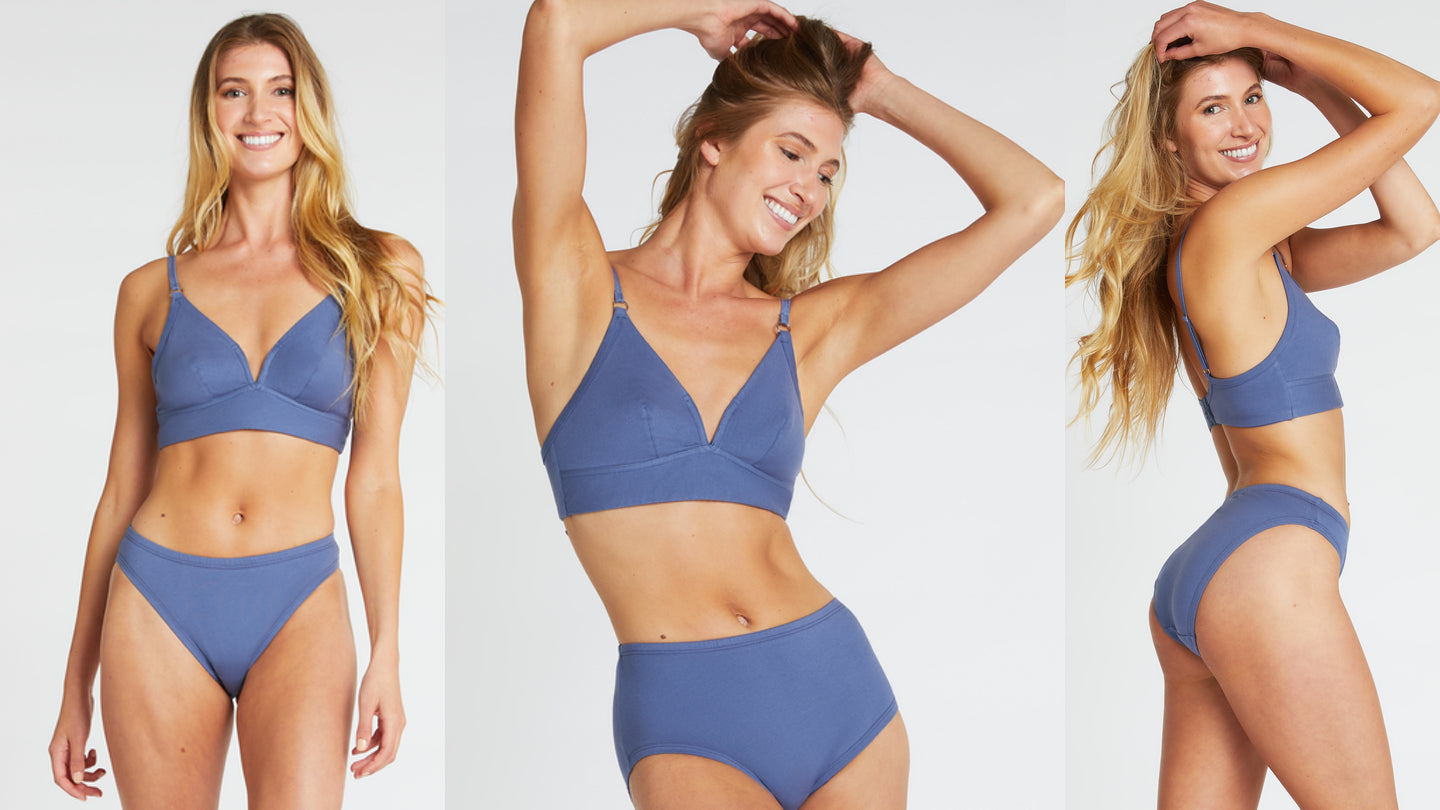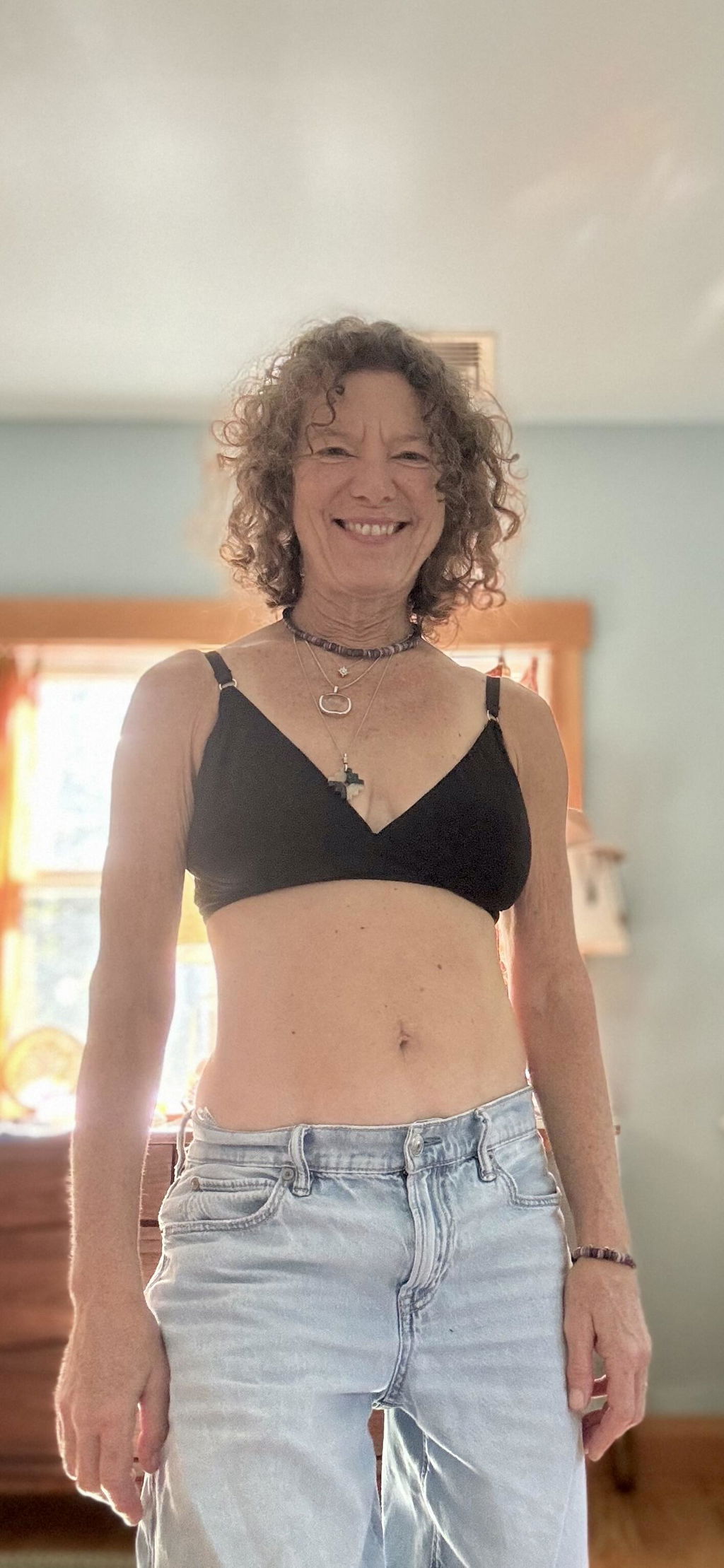
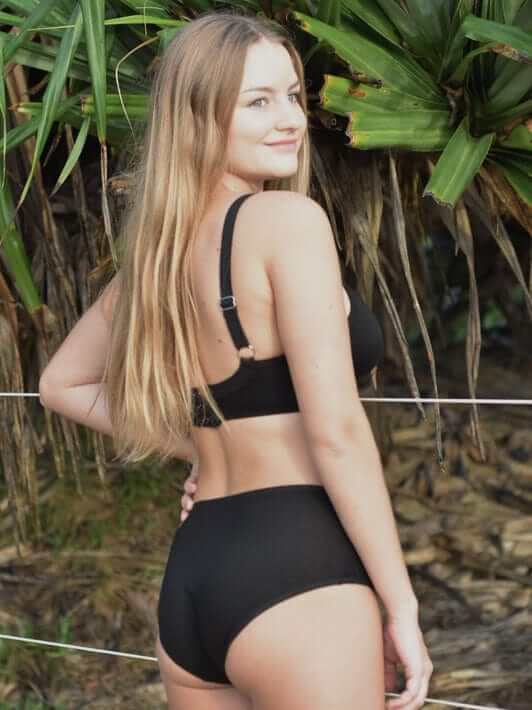
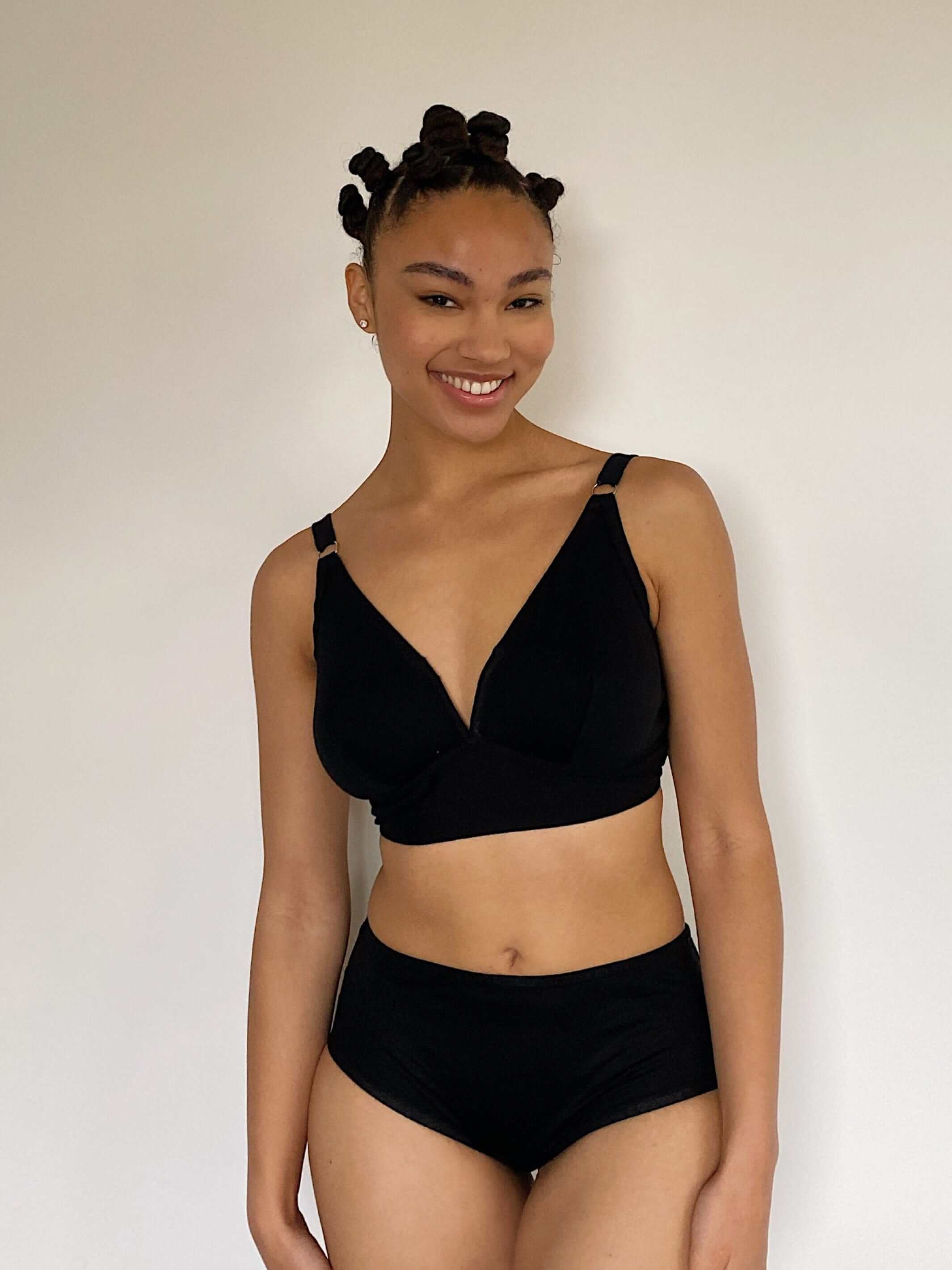

Type "100 per cent cotton bra" into Google. You will find a few thousand results. Click into the listings and check the materials, and almost every "100% cotton" bra has a footnote: "main fabric 95% cotton, 5% elastane". Or "shell: 100% cotton. Lining: polyester. Elastic: nylon." The marketing is technically true. The bra is not 100% cotton.
This is not a small linguistic issue. It is the central structural problem of the natural fibre lingerie industry. The 5 per cent of synthetic in an "organic cotton" bra is enough to lock the bra out of recycling, prevent composting, contribute microplastic shedding for years, and irritate the skin of women buying the bra precisely to avoid synthetic. We disagreed with the industry standard a long time ago.
What "100% cotton" actually means on a label
The label is normally telling the truth about one component while staying quiet about the others. When a bra is described as "100% cotton" in marketing, it almost always refers to the main outer fabric. The lining, the elastic, the thread, the seam tape and the strap insides are typically not disclosed. Here is what the materials list actually looks like for the most common "natural" bras on the Australian market, compared with what a bra needs to be to genuinely compost or recycle.
| Component | Typical "100% cotton" bra | Genuinely natural fibre bra |
|---|---|---|
| Main cup fabric | 95% organic cotton, 5% elastane | 100% organic cotton or TENCEL |
| Cup lining | Polyester or undisclosed | Organic cotton or none |
| Foam pad (if present) | Polyurethane foam | None |
| Band elastic | Synthetic rubber wrapped in nylon | Natural rubber knitted into cotton |
| Strap elastic | Spandex / elastane | Natural rubber and cotton |
| Sewing thread | Polyester | 100% cellulose |
| Care label | Polyester or polyester-coated paper | Recycled paper or printed |
| Hardware | Plastic or metal | Metal only - OekoTex certified |
| Recyclable / compostable? | Neither | Both, can be eaten by worms in months |
The first column is what the label calls "100% cotton". The second column is what 100% cotton actually requires. The gap between the two is where most of the bra industry's sustainability claims live.
Why 5% elastane changes everything
Five per cent on a label looks like a rounding error. On the bra, it does several big things at once.
It locks the bra out of recycling. At present, recyclers cannot separate cotton from spandex at scale, so blended garments are sent to landfill or incineration even when they are dropped into a recycling bin. It locks the bra out of composting. Spandex does not break down. A cotton bra with five per cent elastane buried in a compost heap will look much the same in five years as it did the day it went in. It contributes to ocean microplastic pollution. Every wash sheds microfibres. Synthetic fibres make up the bulk of the pollution. By industry estimates, synthetic textiles release around half a million tonnes of plastic microfibre into the world's oceans every year through household washing alone. And it often causes the very irritation that drove women to look for a "natural" bra in the first place. Spandex traps heat and moisture, which is a leading cause of itch and rash under the band.
The bra in your drawer marketed as "natural" is most likely doing all four of these.
Why is it so hard to find a 100% cotton bra?
Two reasons.
The first is technical. The bra industry has built itself around synthetic stretch. Factories, machines, suppliers and pattern-cutters all assume there will be elastane in the fabric. Switching to natural rubber elastic and cellulose thread requires different sourcing, different sewing techniques and different quality control. When we asked factories to stitch with cellulose thread, a small number of them declined the work, because cellulose runs slower on high-speed lines and breaks more easily under industrial tension. Most agreed. The point is that the supply chain for genuinely natural fibre lingerie is small, and friction at every stage adds cost.
The second reason is the consumer side. For a long time the assumption was that women wanted "lift" and "shape", which the industry equated with synthetic structure. The conversation has shifted. The Washington Post recently reported that wireless and soft cup bras have, for the first time in five years, outsold wired ones in the United States. More women are asking for breathable, soft, natural bras that feel good rather than perform a particular silhouette. The supply chain is catching up.
What we did differently
Our 100% organic cotton bras are made from organic cotton in the main fabric, with natural rubber elastic knitted into organic cotton, and 100% cellulose thread throughout. The labels are recycled paper. Even the packaging is compostable or recyclable. This means the bra is genuinely natural fibre at every component, can be eaten by worms at end of life, and feels noticeably different on the skin from a "natural" bra that quietly contains spandex.
It also means we cannot use the manufacturing shortcuts most brands use. The cost is reflected in the price and in the slow-fashion model we run on. We have written more about how the industry quietly settled for "97% organic" as the threshold of sustainable, and why that 3 per cent matters, in our post on sustainable bras.
How to read a label properly
If a bra is being marketed as 100% cotton, look for these specifics on the actual label. Main fabric composition: is it 100% cotton, or is there a percentage of spandex, elastane or nylon hidden in the small print? Lining and trim: often the main fabric is pure but the lining is synthetic. Elastic: almost never disclosed. If the brand does not mention it, it is almost certainly synthetic. If its called 'bio-elastic' or 'biodegradable elastic' ask more. Thread: polyester is standard even on organic garments. Cellulose thread is rare and worth looking for.
If the label only says "main fabric: 100% cotton", the bra is not 100% cotton. The marketing department wrote that line. The factory wrote the materials list, and the materials list is printed on the inside of the bra in tiny letters the brand is hoping you will not read.
If you are choosing for wormability and end-of-life impact, the label needs to disclose every component, not just the front fabric. Our sustainable bras include the full ingredient list on every product page, because anything less is the same problem dressed differently.