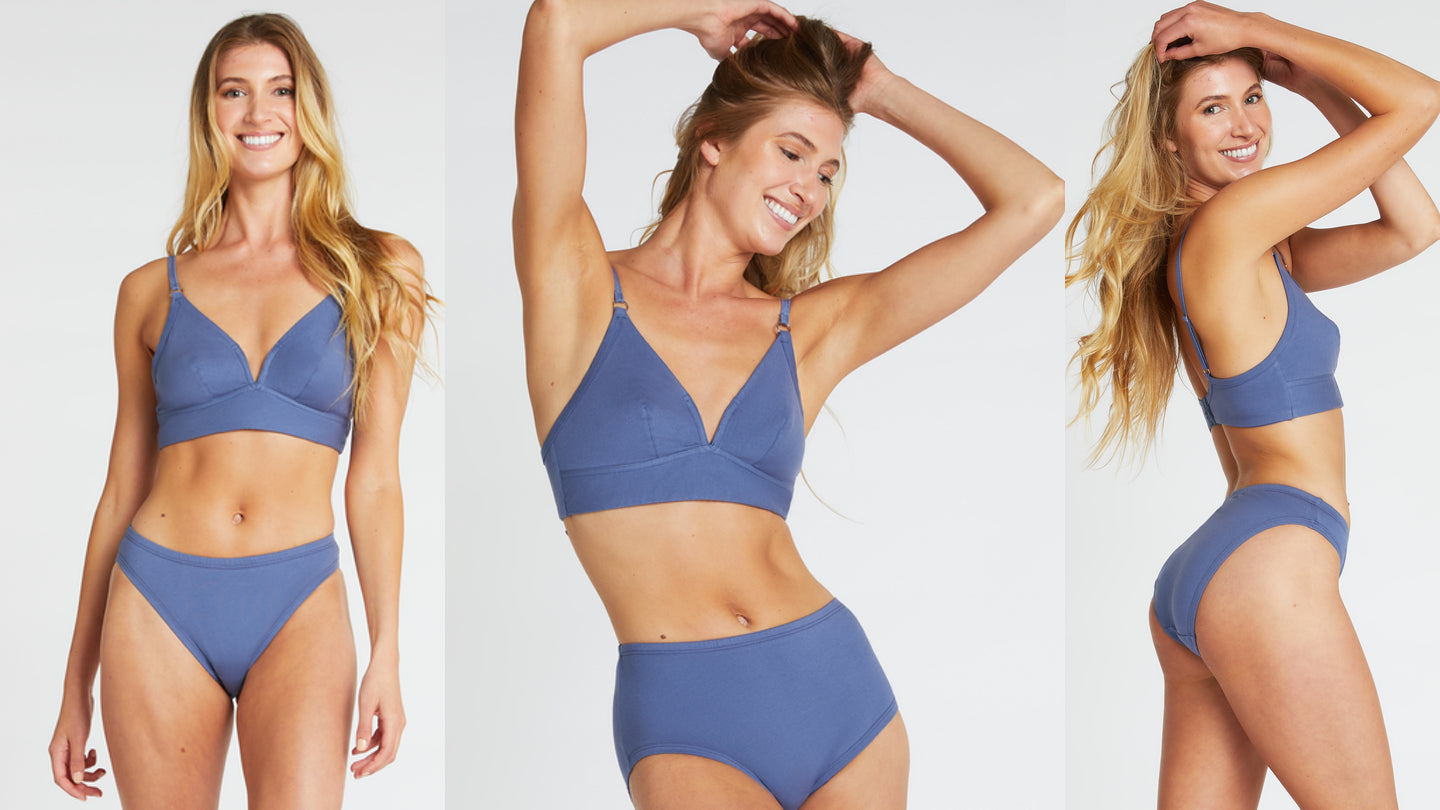

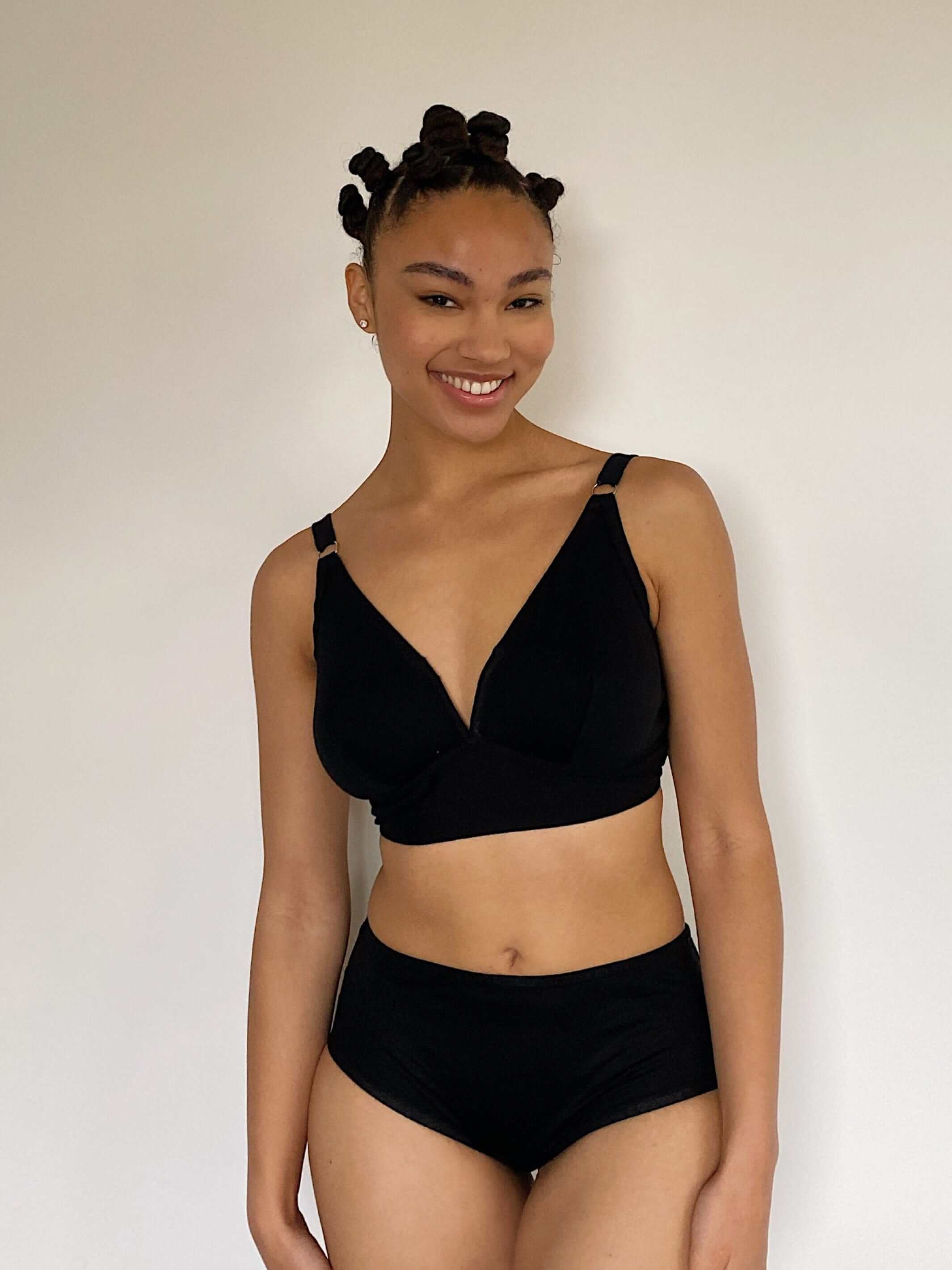

The first nursing bra most women buy is whichever one is on the shelf at the chemist or supermarket the week before the baby arrives. By six weeks postpartum, most of those bras have been quietly demoted to the bottom of the drawer, and the search for something better has begun.
What follows is the practical version of that search. What to look for in a nursing bra. Why fabric matters more during the postpartum period than at any other point in life. And what an organic cotton nursing bra actually changes about the day-to-day.
Why fabric matters more during nursing
The breast tissue of a breastfeeding mother is doing more work and is more sensitive than it has been in years. Skin can be cracked, sore, hot, leaking and reactive to almost anything. The fabric of the bra you spend 18 hours a day in becomes one of the most important variables in how the postpartum period feels.
Synthetic nursing bras (the most common kind on the Australian market) trap heat and moisture, which is exactly what you do not want against breast tissue that is already prone to clogged ducts and mastitis. Natural fibre bras breathe, regulate moisture, and keep the skin and milk environment as healthy as possible. The difference shows up in the first week of switching, and every breastfeeding educator and lactation consultant we know recommends natural fibre over synthetic for this reason.
What an organic cotton nursing bra actually is
An organic cotton nursing bra is a nursing bra made from 100% organic cotton, ideally with no spandex blended into the main fabric - ours have none. The "organic" part means the cotton is grown without synthetic pesticides or fertilisers, and processed without the chemical finishes that can linger as residues in conventional cotton.
For nursing specifically, this is the safest fabric you can wear. Breast milk is not contaminated by what is in the fabric, but the skin around the nipple absorbs whatever it is in continuous contact with. The sensitivity of postpartum skin makes the choice of fabric feel different in a way that is hard to describe until you have tried it. Customers writing in to us mention this most: "I did not know a bra could feel like nothing."
The features that matter
Beyond the fabric, a good nursing bra needs a specific set of features. The list below is the non-negotiables we engineered into our own range, after working through what failed in the bras we tested at the start.
- Easy cup access. The cup that drops down for feeding should be managed with one hand. Two-handed clip systems are unworkable when you are holding a baby. Look for a single clip or hook at the strap. Ours are a pull-down style requiring no clips.
- Wire-free construction. Underwire compresses milk ducts, which is one of the leading causes of clogged ducts and mastitis. Almost every breastfeeding educator and lactation consultant recommends avoiding wire during the breastfeeding period.
- Wide soft band. The band carries the weight, which fluctuates significantly through a feeding cycle. A wide band stays in place even as the bust changes size hour to hour.
- Adjustable straps with a useful range. Strap length matters more during nursing than at any other point in life. Multiple adjustments per day is normal.
- Easy to wash and dry. Nursing bras get worn for long stretches and washed often. They need to handle frequent washing without breaking down.
- Structured but unmoulded cup. The cup needs to give shape without locking in a particular size. Foam-moulded cups suit one breast size and fail at the others. A soft structured cup accommodates the dramatic size fluctuation that happens through a feeding cycle.
- 100% natural fibre throughout. No spandex, no nylon lining, no polyester thread. The whole bra, not just the main fabric.
Why we make ours the way we do
Our organic cotton nursing bras are made from 100% organic cotton, with natural rubber elastic and cellulose thread. No spandex, no nylon, no foam, no synthetic elastic. Every component is plant-based, which means the bra can be fed to your worm farm at end of life and breathes properly during the months of constant wear.
The pull-down cup Is easy to operate. The cup is structured but unmoulded, which suits the dramatic size fluctuation that happens through a feeding cycle. The band is wide and soft. The strap is adjustable across a useful range, so the bra fits before the milk comes in and continues to fit through the early weight changes. Our cotton nursing bra is the simplest version of the range and the one we recommend most often.
Sizing during the breastfeeding period
The bust changes more during the first six weeks of breastfeeding than at any other time in adult life. Buying a "perfect fit" nursing bra at 38 weeks pregnant is mostly futile, because by week two postpartum your breasts are already a different size.
The practical approach is to buy a nursing bra that has range built in: a soft cup that accommodates fluctuation rather than a rigid moulded shape, a band with give, and adjustable straps. Then size up or down once or twice as the breastfeeding pattern settles.
If you are between sizes, choose the one you would feel more comfortable in. Our size guide walks through the measurement and there is a continuous-sizing chart so you can size up easily as the body changes.
Comfort, mastitis and the milk supply
A properly fitted, breathable, wire-free nursing bra reduces three of the most common postpartum issues. Clogged ducts. Mastitis flare-ups. The chronic discomfort of badly designed bras worn for 18 hours a day. None of this is incidental. Every breastfeeding parent we know has a story about the wrong bra causing a milk problem at the worst possible moment.
If you are getting recurring clogs or mastitis, look at the bra before you look at the latch. Wire compression and synthetic fabric are common contributors, and the fix is often as simple as switching the bra.
For sleep, a 100% organic cotton shelf-bra singlet works better than most "sleep bras" sold for the breastfeeding period. Soft enough to wear all night. Supportive enough to hold breast pads in place. Easy to feed in. Several of our customers sleep in our shelf-bra singlets through the first six months of breastfeeding and find them more comfortable than dedicated nursing sleep bras.