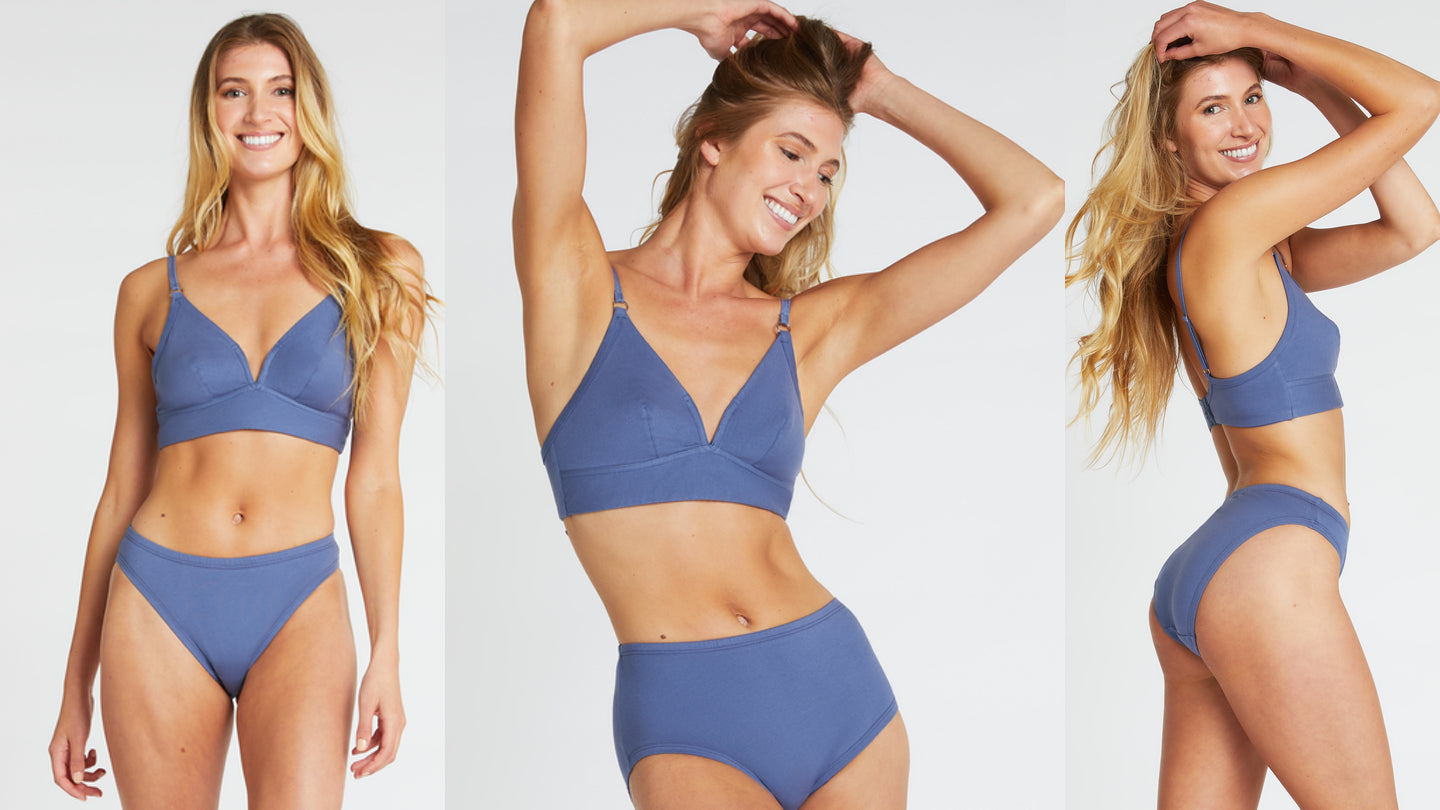
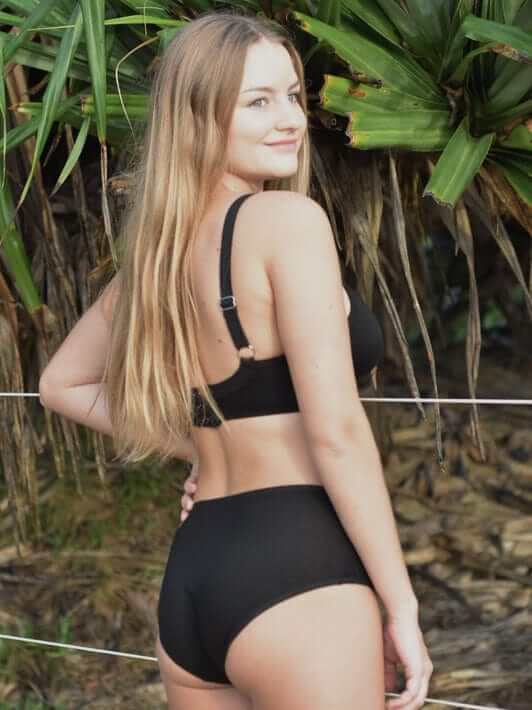
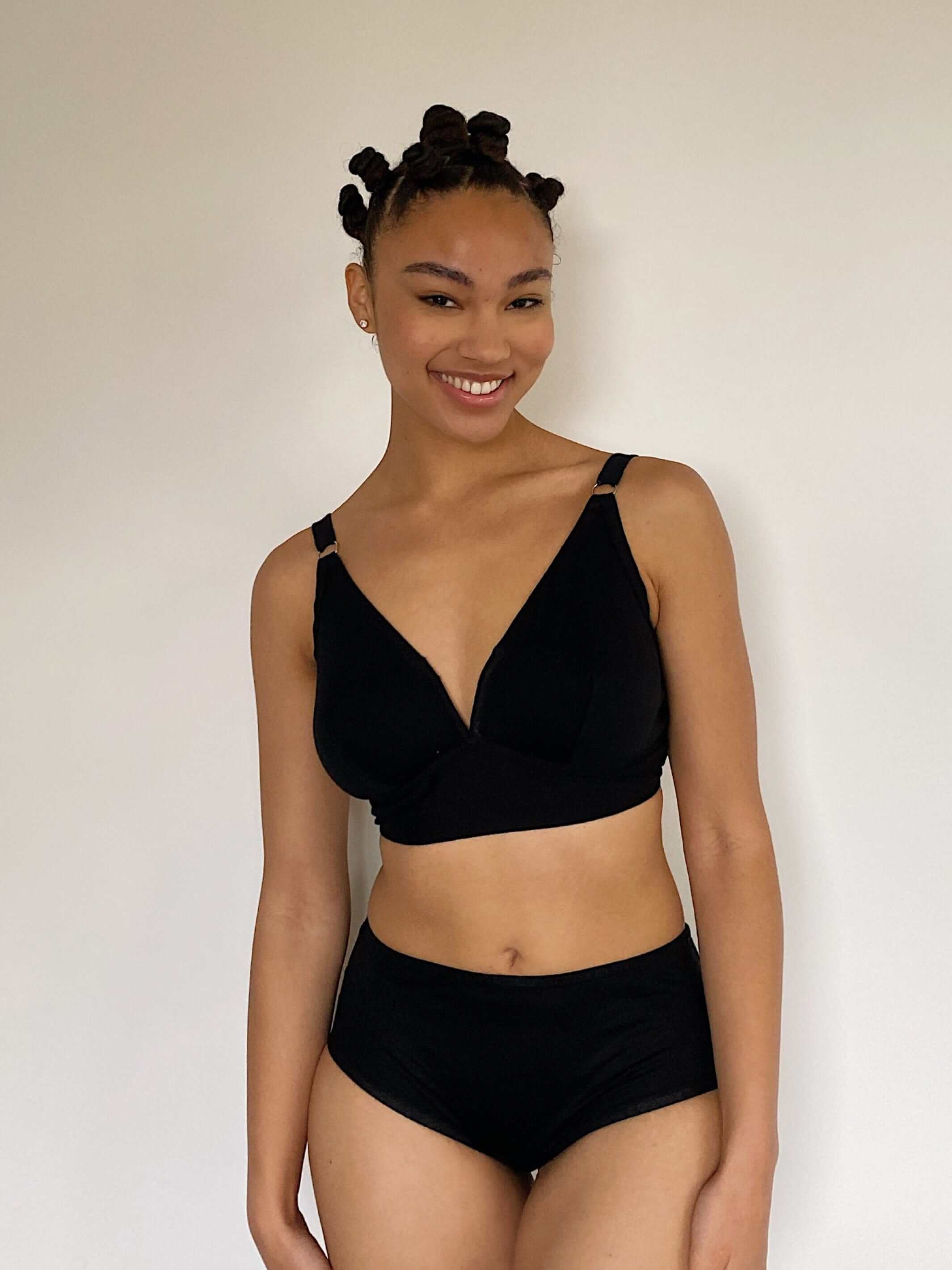

"Plastic-free" is a phrase the lingerie industry uses freely. It is also a phrase very few brands have actually earned. The reason is structural. A bra is one of the more complicated garments in your drawer, made from a surprising number of different materials, and almost all of them have been quietly synthetic for decades.
The marketing departments of large brands like to tell you that "every component is plastic-free", but a quick look at the materials list usually reveals 5 per cent spandex in the cup, polyester thread holding the seams, and a synthetic elastic in the band. Calling that bra plastic-free stretches the meaning of the word.
Below is what every component of a bra is normally made of, what the actual challenge is in replacing each one, and what 100% plastic-free looks like when you build it deliberately.
1. The main fabric
The fabric of the cup and band is the most visible part of the bra and the most discussed. It is also where most brands stop. A "natural fibre bra" usually has a 95 per cent organic cotton main fabric with 5 per cent elastane added for stretch. The 5 per cent sounds small. It locks the bra out of recycling, prevents composting, and contributes to microfibre pollution every wash.
A genuinely plastic-free bra uses 100% natural fibre fabric. Organic cotton or TENCEL are the two viable options. The cotton breathes and is hypoallergenic. The TENCEL has natural antibacterial properties and feels silkier on the skin. Either is a complete fabric in its own right, with no synthetic blended in. Our 100% organic cotton bras are built around this rule.
2. The elastic
This is where almost every "natural" bra fails. The band elastic, the leg elastic in your briefs, the strap elastic, all of it has been synthetic by default for fifty years. Conventional bra elastic is synthetic rubber wrapped in nylon or polyester yarn, sometimes with additional spandex woven through. It stretches, recovers, lasts long, and ends up in landfill for centuries.
A plastic-free bra replaces this with natural rubber elastic knitted into organic cotton or tencel. The elastic stretches and recovers like conventional elastic. It feels slightly firmer at first, because the cotton sleeve is breathable rather than synthetic-smooth. It also breaks down completely at end of life, like the rest of the bra.
If a brand does not specifically tell you what their elastic is made of, the answer is almost always synthetic. The fact that they do not mention it is the tell.
3. The sewing thread
Almost no one thinks about thread, which is precisely why almost no one makes thread plastic-free. Most thread used in clothing manufacturing today is polyester. It is cheaper than cotton thread, stronger, and consistent across batches. It is also a permanent contaminant that runs through every seam of every garment, and it prevents the garment from being recycled or composted.
A plastic-free bra uses 100% cellulose thread. Cellulose thread is plant-based, breaks down at the same rate as the fabric, and disappears with the rest of the bra at end of life. It is invisible in the finished garment but transformative in the lifecycle. We had factories decline the work when we asked them to stitch with cellulose thread, because cellulose runs slower on high-speed lines and breaks more easily under industrial tension. Most agreed. The factories that did remained our manufacturing partners.
4. The labels
Care labels are usually polyester or polyester-coated paper. They are tiny, they touch the skin (often unpleasantly), and they do not break down. A plastic-free bra uses cotton labels or printed-on care information. No woven polyester tag at the back of the neck. We use the latter, care info printed directly on the inside of the band, to avoid the polyester tag entirely.
5. The cup lining and pad
If a bra has a cup lining or removable pad, this is a place where synthetics often sneak in. Yep, hands up here, some of our latest bras have optional pads but these can be removed or opted out of. Foam cup pads are almost universally polyurethane, which is a plastic. Cup linings are commonly polyester even on "100% cotton" main fabrics. Both are listed as "lining" on the materials tag in tiny print, and both are usually unmentioned in the marketing copy.
A plastic-free bra either has no lining at all (most natural fibre bras work this way) or uses a 100% organic cotton lining.
6. The hardware
The hooks, eyes, slides and rings on a bra are typically metal. Metal is fine, it is not plastic. The plastic versions of bra hardware (often used in cheap bras to save weight) should be avoided where possible. Metal lasts longer, holds adjustment better, and does not contribute to plastic load. Our hardware is all metal. OekoTex certified and Cadmium and Nickel-free.
7. The packaging
The bra arrives in something. That something is normally plastic mailer, plastic-coated tissue, or polybag. A plastic-free bra arrives in recyclable tissue paper inside a 100% compostable mailer. The packaging is part of the lifecycle and does not get a free pass. This is the component most brands forget about, because it is the part the customer throws straight in the bin.
What "plastic-free" means when you put it all together
A 100% plastic-free bra is a bra where every single one of those components has been replaced. Main fabric. Elastic. Thread. Label. Lining. Hardware (metal not plastic). Packaging. Miss one and the claim is no longer accurate.
This is what we make. Every part of our sustainable bras can be cfed to worms at end of life, including the thread holding it together. There is no part of the bra that requires a special recycling path or ends up in landfill. The bra arrives in plastic-free packaging, lives through washing and wearing, and (when its time comes) goes back into the soil.
Why this is rare and why it is worth the effort
The honest reason most bra brands do not make 100% plastic-free bras is that it is harder and more expensive. The supply chain is smaller. The manufacturing is slower. The per-unit cost is higher. The synthetic shortcuts (5 per cent spandex, polyester thread, polyester labels, plastic packaging) have been industry default for so long that building without them requires deliberate effort at every stage.
The reason it is worth the effort is structural. Australians send 85 per cent of textiles to landfill, and roughly 600,000 tonnes of textile waste a year by industry estimates. Two-thirds of that load is synthetic fibres that take 200 years to break down. Underwear is among the worst offenders because we replace it constantly and almost always in synthetic blends. A 100% plastic-free bra, used and composted properly, leaves the system rather than entering the next two centuries of textile waste.
We have written more about how the industry quietly accepted "97% organic" as the threshold of sustainable, and why that 3 per cent matters, in our post on sustainable bras still containing plastic. The same logic applies here. Either every component is plastic-free or it is not. There is no exception worth granting.