

"Compostable underwear" sounds like a phrase the marketing department invented and the fact-checking department forgot about. Plenty of brands use it. Almost none of them mean it.
True compostable underwear is rare because it is hard to make. Its even harder to certify as no globally recognised testing standards exist - there's more on that soon! Every component (fabric, elastic, label, sewing thread, dye) has to be plant-based and able to break down. Most of what gets sold as "biodegradable" or "eco" underwear contains 5 to 10 per cent spandex or elastane, which means it cannot be composted or wormed, cannot be recycled, and will outlast everyone reading this article in a landfill.
Worms will eat cotton. They will not eat spandex. Not even five per cent of it.
Why almost all underwear fails the test
Walk into any underwear shop and check the labels. Most "natural" briefs are organic cotton or bamboo with 5 to 10 per cent spandex added for stretch. That percentage is small in the fabric and complete in the consequence. A garment containing any synthetic fibre cannot be composted. It cannot be recycled either, because separating cotton from spandex is not currently possible. Textile recyclers in Australia and most of the world send all garments blended with spandex to landfill regardless of which bin they were dropped into.
The same applies to the elastic at the waistband and leg openings. Conventional underwear elastic is synthetic rubber wrapped in nylon or polyester yarn, often with additional spandex woven through. Even when the rest of the garment is natural fibre, that elastic alone is enough to send the whole pair to landfill at end of life. So is the polyester thread holding it together, which most brands do not disclose at all.
If the label only mentions the main fabric, the rest is almost certainly synthetic. The fact that the brand has not specified is the tell.
What "compostable" actually means
"Compostable" has a tighter definition than "biodegradable". Biodegradable is a marketing word with almost no regulation behind it, technically a plastic bag biodegrades in 200 to 1,000 years, which qualifies in the loosest sense. Compostable means the product breaks down into soil-safe organic matter under normal composting conditions, with no toxic residue, in a timeframe measured in months not centuries. HOWEVER! Having spent 4 years working with a dedicated team of scientists at Deakin University and Textile Technicians, we still can't effectively market a product as 'compostable' because even though we succeeded in developing a world-first TS for Textile Composting in 2025, it only relates to pre-consumer, or brand new garments. There's a few more years of work to identify which detergents and softeners can potential render the used garment unsafe to bury in your garden! If you see a brand using 'compostable' be wary. No globally approved methodology or certification exists to verify that yet.
Our bras were eaten in a worm farm in 8 weeks, and worms are the highest arbiter of good taste! If a bra can be eaten in a worm farm, it's safe to apply to soil. That's about it.
For clothing, it's a high bar. The fabric needs to be a plant or animal fibre. The dyes need to be non-toxic. The thread holding it together needs to break down at the same rate as the fabric. The elastic needs to be plant-based too. If any one of those is missing, the garment is not safe to return to soil. The label might say so. The worms tell the truth.
We continue to work with Standards Australia on the development of this AS, a textile-specific compostability standard would let consumers verify the claim and let commercial composters accept textiles without contamination risk. That work is ongoing.
Whilst no commercial waste facilities will take textile waste at present, and the EPA won't allow them to until we understand the impact of detergents, I put my own undies in my own compost! This is because I wash with low impact, un-fragranced detergent. As a society, we allow grey-waste systems with no oversight of the detergents used, and so I choose to compost my own undies. If you know how you launder, you can probably do the same.
How our underwear is built differently
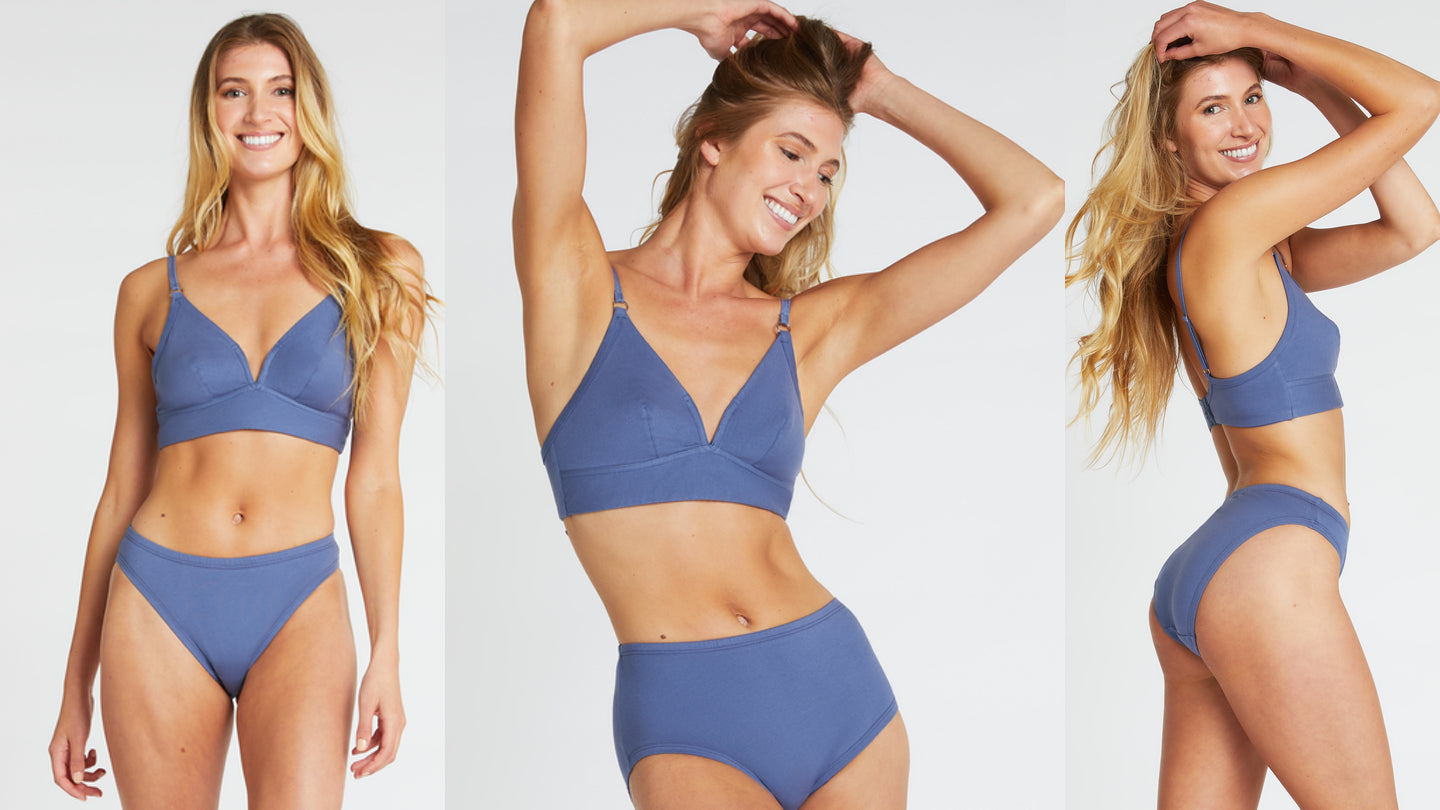
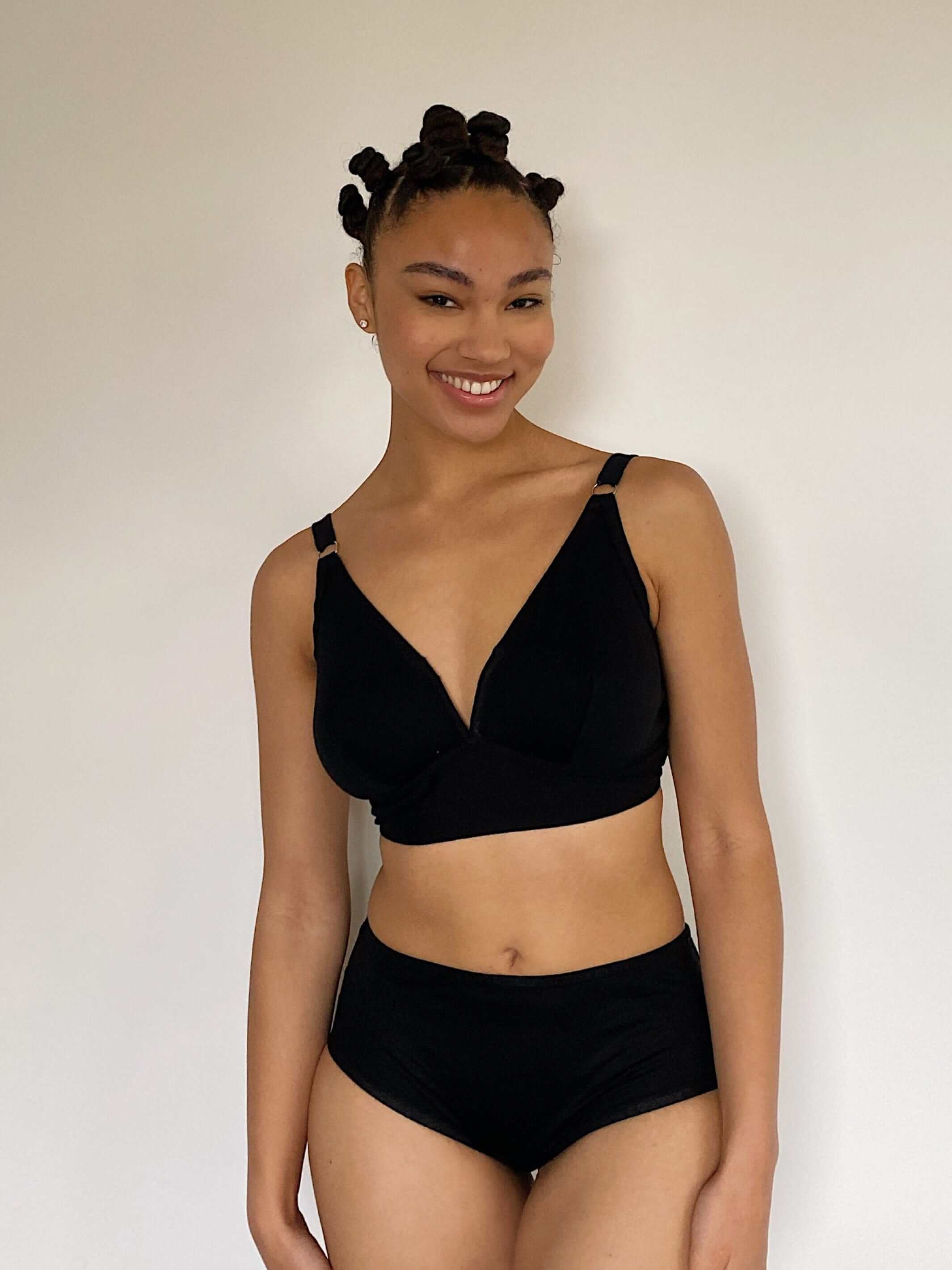
Building underwear that worms will eat requires changing every component, not just the fabric. Ours uses 100% organic cotton or TENCEL for the main fabric, with no spandex, no elastane, no nylon. The elastic is natural rubber knitted into organic cotton, it stretches and recovers like conventional elastic, and breaks down like a leaf., albeit over a longer time-frame! The sewing thread is 100% cellulose, which is plant-based all the way through. Most thread is polyester, even on otherwise organic garments. Ours is not. Our packaging is compostable or recyclable.
The result is underwear you can wear daily, wash conventionally, and (when it is finally past use) bury in a worm farm. Our compostable underwear range sets a high bar.
How to actually dispose of your Very Good underwear
When your VGB knickers have reached the end of their wearable life, and they really do last for years if you wash them gently, here is the process:
- Cut into smaller pieces. Compost and worms work on surface area. Aim for strips around 5 to 10 centimetres in size. The smaller the pieces, the faster they break down.
- Bury in the worm farm or compost heap. For a worm farm, place the strips in a damp section towards the lower layer and cover with shredded paper or other "brown" matter. For a backyard compost, add to the middle of the heap where decomposition is most active. Mix with green and brown waste.
- Maintain normal moisture and turn frequency. The fabric does not need special care. It will break down alongside food scraps and garden waste under normal conditions.
- Check at six to eight weeks. The fabric should be visibly degraded. Full breakdown takes two to four months in an active home worm farm and three to six months in a backyard compost. The elastic will take longer.
For comparison, a pair of conventional polyester knickers buried in the same conditions will still be intact in a hundred years. The microplastics released along the way will outlive every generation that follows.
The bigger picture
Australians send 85 per cent of textiles to landfill, two-thirds of which are synthetic fibres. Conventional underwear is among the worst offenders because it is high-volume, low-mass, almost always blended, and slips through textile recycling sorting. By the most-cited industry estimates, around 600,000 tons of textile waste is produced in Australia each year.
Choosing compostable or wormable underwear does not solve the global textile waste crisis. It does mean that when your knickers reach end of life, they leave the system rather than enter the next two centuries of landfill stockpile. That is a small choice with a long tail. We have written more about how the underwear industry got here in our piece on why most sustainable bras still contain plastic, which applies to knickers too. The same 3% rule, the same hidden polyester thread, the same problem.
One pair of knickers does not change the system. Twenty pairs across a few years, multiplied across enough households, starts to.