
If you have eczema, you already know the routine. Buy a new bra. Wear it for half a day. Notice the itch. Take it off. Find the rash where the band sits. Wonder if you are allergic to something. Buy a different bra. Repeat.
The problem is rarely "an allergy" in the strict sense. It is the fabric, the elastic and the seam construction working against your skin barrier. The Australasian College of Dermatologists consistently flags synthetic fibres, friction and trapped moisture as the three biggest non-allergic triggers for contact eczema flares. All three live inside a conventional bra.
Once you understand what is causing the flare-up, choosing a bra becomes simpler.
Why bras trigger eczema
Three things cause most bra-related eczema flare-ups, and most "natural" bras still contain at least two of them.
Synthetic fabric trapping heat and moisture. Polyester, nylon and elastane do not breathe. Sweat sits between the fabric and the skin, which softens the skin barrier and creates the warm damp environment eczema thrives in. By midday the band area is itching, and by evening it is red.
Friction at seam edges. Underwire seam casings, padded cup seams and back closures all create friction points where skin rubs against fabric or hardware. Sensitive skin reacts to that friction long before non-sensitive skin notices anything.
Chemical residues from manufacturing. Conventional cotton is grown with pesticides and can be processed with formaldehyde-based finishes. Some of those residues stay in the fabric even after multiple washes. Recent lab testing reported by Euronews found that up to 30 per cent of women's underwear sampled in Europe contained BPA above safe levels, with synthetic fibres carrying the highest concentrations.
The fabrics to avoid
If your bras are triggering eczema flares, the fabrics doing the most damage are the ones you have probably been told are fine. The list below is the materials we tell customers to read for on a label, and walk away from when present.
- Polyester, non-breathable, traps heat, sheds microfibres in every wash, can carry BPA-related residues. Most "performance" bras and sports bras are polyester-based.
- Nylon, chemically similar to polyester for skin purposes. Often used in linings and as elastic carrier yarn.
- Elastane / spandex / lycra, three trade names for the same fibre. Even at 5 per cent it runs through the entire fabric, so there is no part of the bra that is genuinely breathing.
- Acrylic and acetate, less common in lingerie now, but still present in some shapewear and lined bras.
- Bamboo viscose, sold as "natural" but processed with sodium hydroxide and carbon disulphide. Often blended with spandex. Read the full materials list.
- Conventional (non-organic) cotton, better than synthetic, but processing residues can still trigger sensitive skin. Look for organic cotton specifically.
The fabrics that work
Dermatologists in Australia and overseas generally recommend natural fibres for eczema. The reasoning is straightforward: natural fibres breathe, regulate moisture, and have not been chemically processed in ways that linger in the fabric. The two best options for bras are organic cotton and TENCEL.
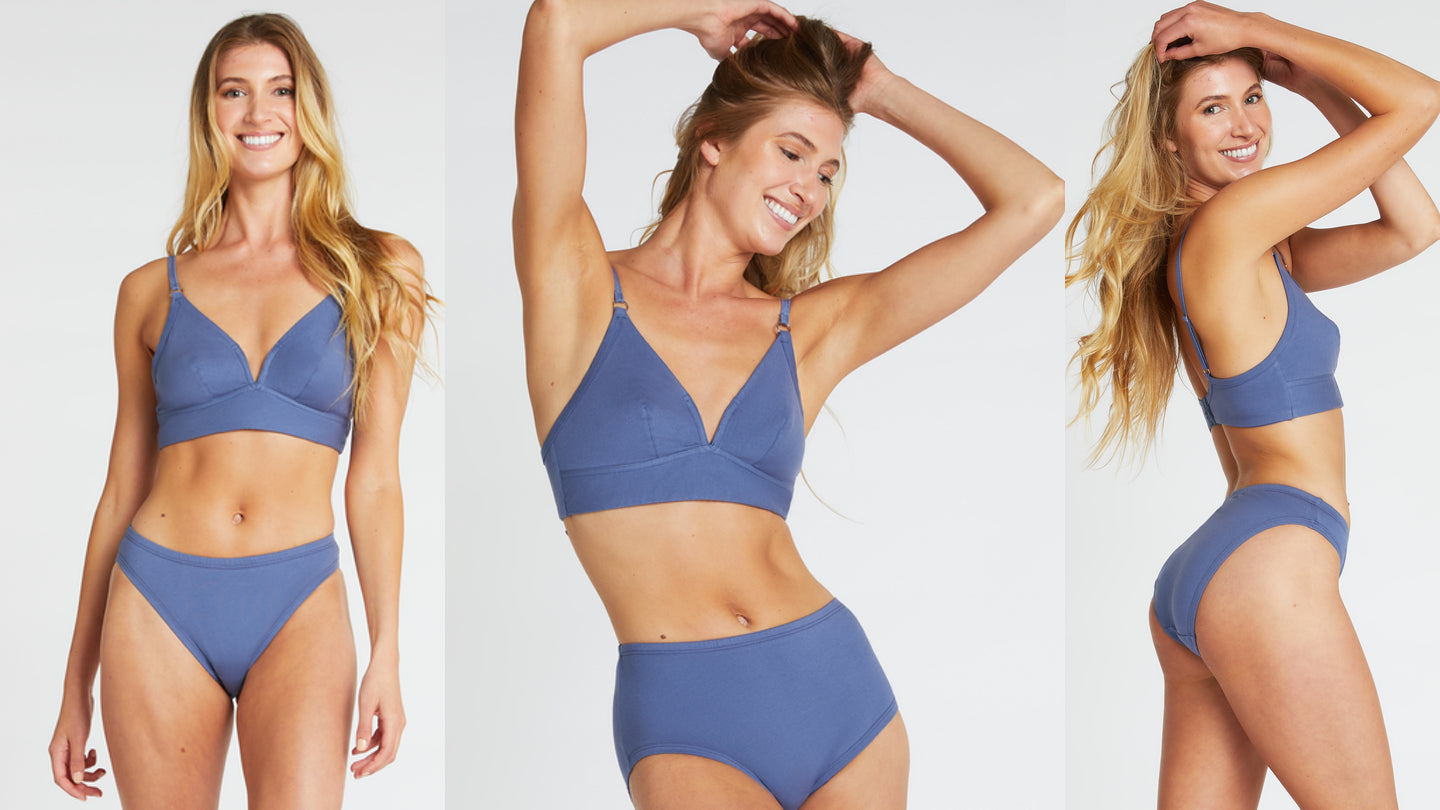
Our 100% organic cotton bras are the gold standard for eczema-prone skin. Soft, breathable, hypoallergenic, grown without pesticides and processed without the chemical finishes that can trigger sensitivity. The "organic" certification matters, because conventional cotton brings the chemical residue problem with it.
TENCEL is made from sustainably harvested wood pulp in a closed-loop process. It feels silkier than cotton, has natural antibacterial properties, and is exceptionally good at moisture regulation. Particularly useful for women who get heat rashes or run hot.
Construction features that help
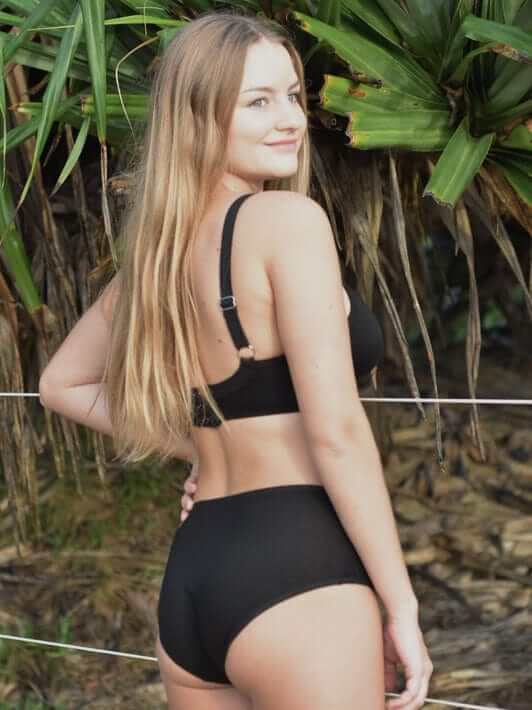
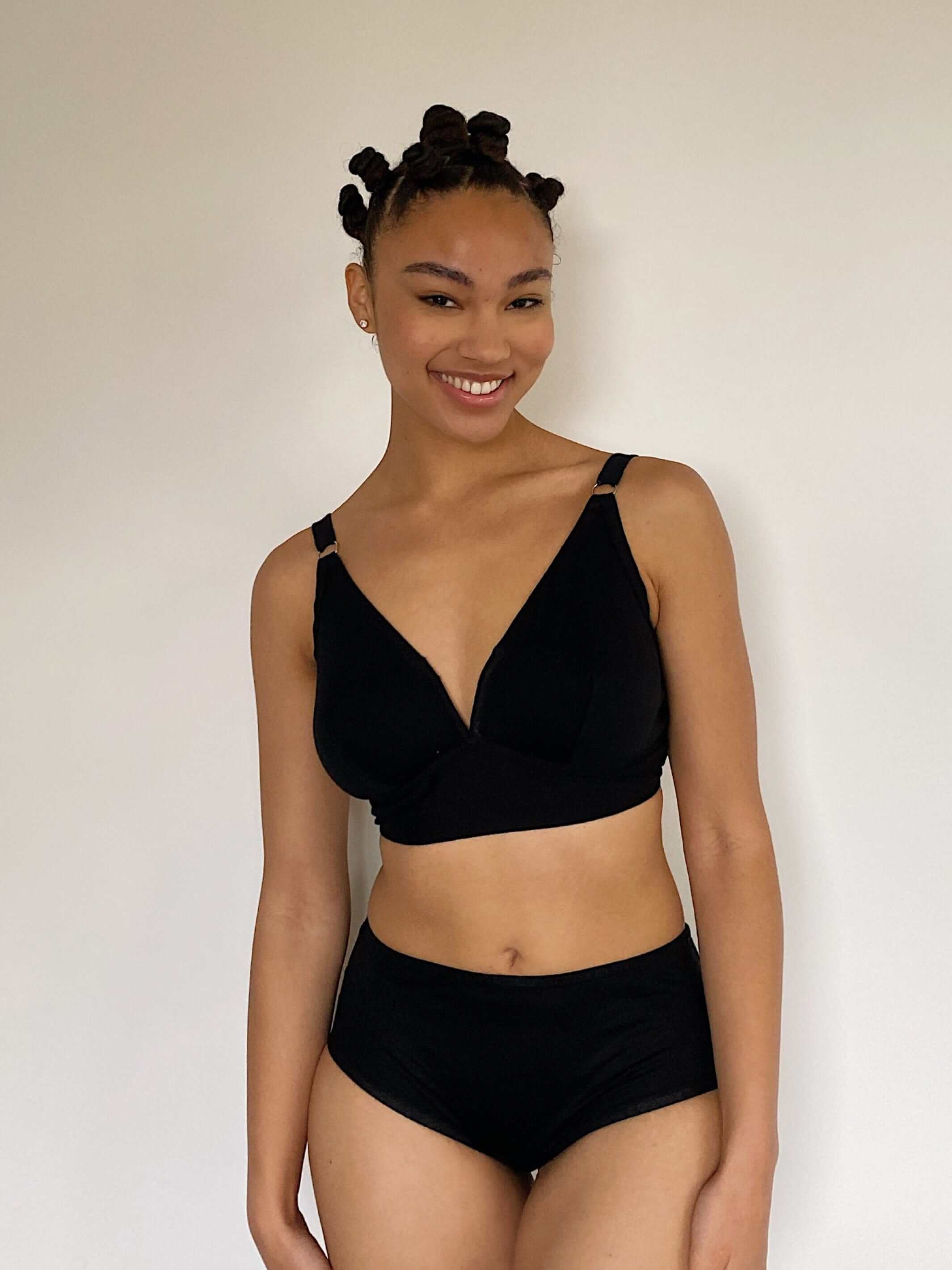
Beyond fabric, a few construction choices make a bra eczema-friendlier. Wire-free design removes the seam casing, which is one of the most common irritation points. A wide soft band spreads pressure across a larger area of skin, where thin tight bands cause more friction. No moulded foam cup, because foam holds heat and breaks down with washing. Flat seams or seamless construction reduce friction at the edges. Soft tag-free or printed labels avoid the stitched-in itch most women have learned to ignore.
Our sustainable range is built around all of these features. We have written more about how every component matters in the best bras for sensitive skin, which covers the same ground from a non-eczema-specific angle.
What to do during a flare-up
If you are mid-flare and the bra you are wearing is making it worse, take it off. Eczema healing requires the skin barrier to repair, and friction or heat slows that down significantly.
If you need to wear a bra for work or comfort, reach for the softest natural fibre option you have. A loose, soft cotton singlet with a built-in shelf bra can be a useful in-between option during a flare. Once the skin starts to settle, you can move back to a normal bra in the same fabric.
Avoid fabric softeners on bras worn against eczema-prone skin. They coat the fibres in residue that can trigger reactions even on otherwise tolerated fabrics. A simple rinse cycle is fine. If you wash with a hand-made detergent or natural laundry powder, double-check it does not contain enzymes or perfume, both common eczema triggers.
How long it takes for skin to settle
If you switch from synthetic to a 100% natural fibre wire-free bra, most women see a noticeable difference within three to seven days. The redness goes first, then the itch. Persistent dryness or scaling takes a week or two longer to settle, and benefits from a moisturiser routine alongside the fabric change.
If your skin does not improve within two to three weeks, the trigger may be elsewhere, washing detergent, body wash, hormonal cycles, or a true skin condition. A chat with a dermatologist is worth it at that point. The bra is an obvious lever and worth pulling first, but it is not the only one.