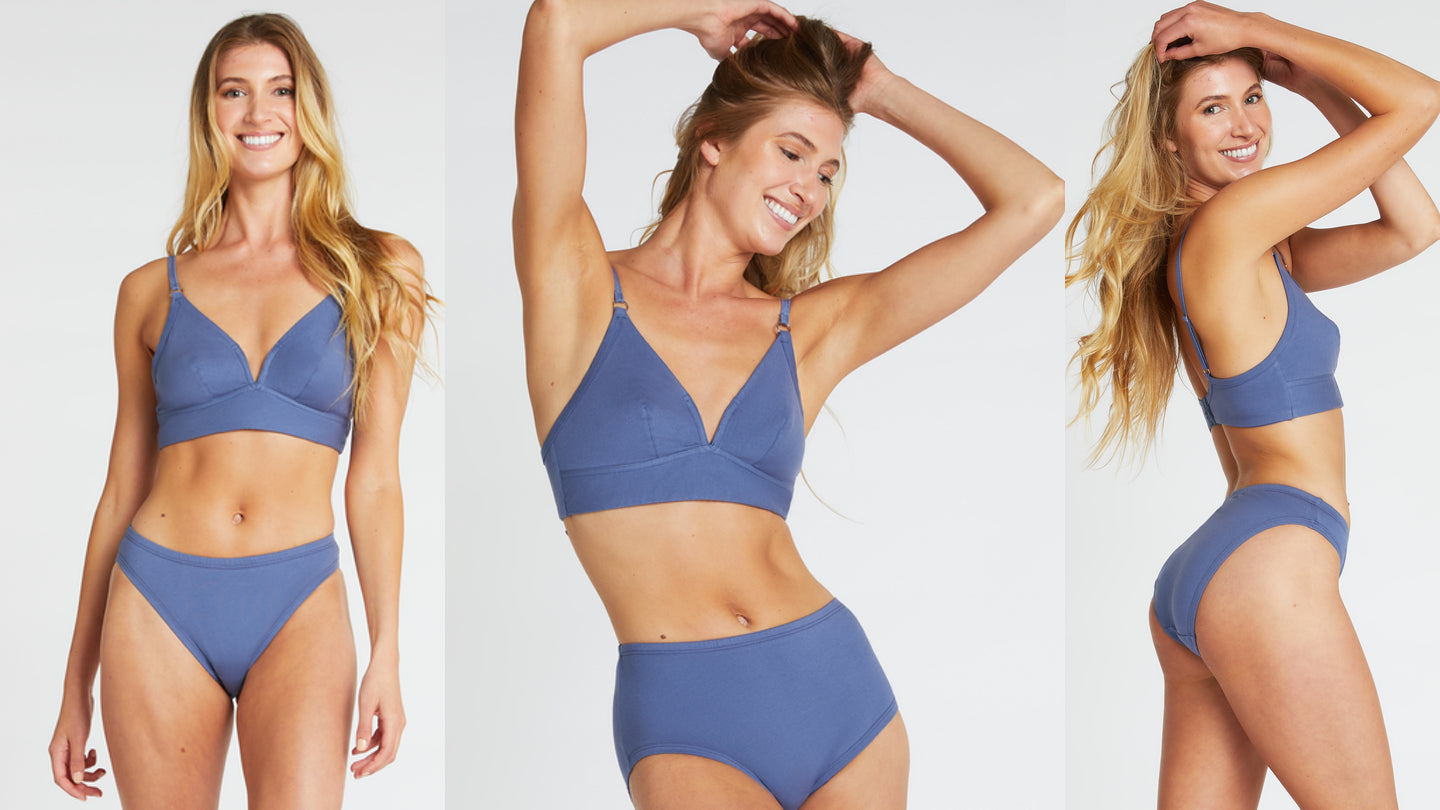
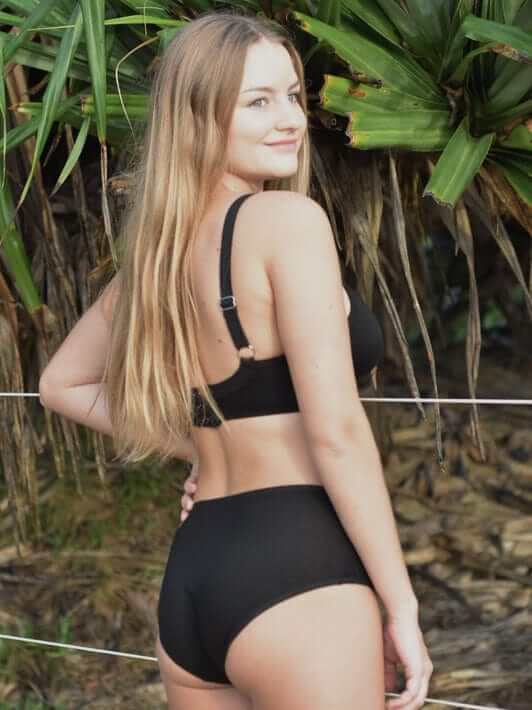
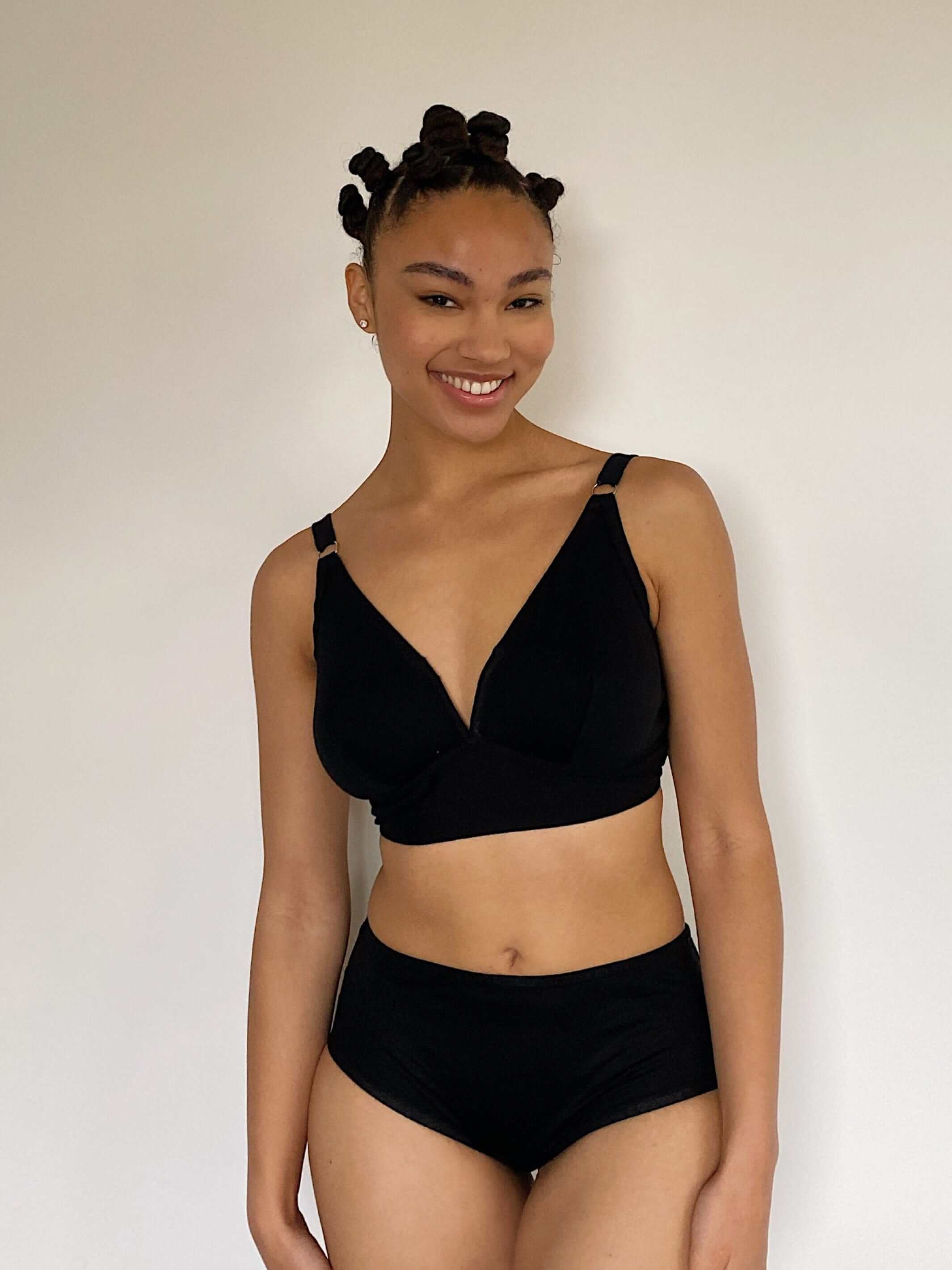

THE VERY GOOD BRA | Sustainable Lingerie & Skin Health
If your bra leaves you itchy, rashy, or red by midday, you are not being dramatic. Fabric science is real, and for millions of women with sensitive or reactive skin, what sits against your body for twelve hours a day matters enormously. The lingerie industry has largely ignored this, filling shelves with bras loaded with synthetic fibres, chemical dyes, and petroleum-derived elastic that do real, measurable harm to skin.
This guide explains exactly why certain fabrics trigger irritation, what dermatologists and skin specialists actually recommend, and why going completely plastic-free and synthetic-free is not just an environmental choice; it is a skin health one.
Why Your Bra Might Be Irritating Your Skin
Skin irritation from clothing is more common than most people realise, and bras are one of the most problematic garments because of how long they are worn, how close they sit to the body, and how much friction and heat they generate throughout the day.
There are three main mechanisms at play:
• Mechanical irritation: Rough, coarse, or stiff synthetic fibres create constant micro-abrasion against skin, particularly under the bust band, at the shoulder straps, and along underwire channels.
• Heat and moisture trapping: Synthetic fabrics like polyester and nylon do not breathe. They trap heat and sweat against the skin, creating the warm, moist conditions that lead to chafing, rashes, and fungal irritation.
• Chemical sensitivity: Petrochemical-derived fibres, synthetic dyes, formaldehyde-based finishes, and chemical elastic (spandex/elastane) can trigger contact dermatitis, allergic reactions, and chronic irritation in susceptible individuals.
The Fabrics That Are Most Likely to Cause Problems
Elastane and Spandex
Elastane (sold under brand names including Lycra and Spandex) is a synthetic polymer made from petroleum. It is found in the vast majority of bras on the market because it provides stretch, and it is one of the most common culprits in skin and textile reactions.
Elastane is not biodegradable. It sheds microplastic particles with every wash and every wear. For people with sensitive skin or contact allergies, the chemical compounds in elastane, including the polyurethane base and the finishing agents applied during manufacturing, can trigger persistent redness, itching, and dermatitis. The underwire casing and bra band are where elastane concentration is typically highest, and not coincidentally, these are the areas where irritation most commonly presents.
Polyester
Polyester is a plastic fibre derived from petrochemicals. It is breathable only in a limited, engineered sense, and it has a well-documented tendency to trap body heat and prevent moisture wicking. This makes it a poor choice for any garment worn directly against skin for extended periods.
Polyester also carries a static charge that pulls the fabric tight against skin, increasing friction. For anyone prone to eczema, psoriasis, or heat rash, polyester bras can actively worsen symptoms. Most lace bras and many "breathable" sports bras are predominantly polyester.
Nylon
Another petroleum-derived synthetic, nylon is often marketed as smooth and soft, but like polyester, it does not regulate temperature well and has a low breathability profile. Nylon can also harbour bacteria more readily than natural fibres, contributing to odour and skin irritation over long wear periods.
Synthetic Dyes and Chemical Finishes
Even when a fabric is nominally natural, the dyes and finishing chemicals used in conventional manufacturing can be profoundly irritating. Azo dyes, formaldehyde resins used to prevent wrinkling, optical brighteners, and antimicrobial treatments are all common in mainstream lingerie. These chemicals can leach from fabric into skin, particularly when heat and sweat are present.
What Dermatologists Recommend Instead
Dermatologists treating textile contact dermatitis and clothing-related skin sensitivities consistently point to the same family of materials: natural, plant-based fibres that breathe, wick moisture, and carry a low chemical load. The two most consistently recommended are TENCEL (Lyocell) and organic cotton.
TENCEL Lyocell
TENCEL is a branded lyocell fibre derived from sustainably sourced wood pulp, typically eucalyptus. It is produced in a closed-loop manufacturing process that recovers and reuses almost all solvents, leaving behind a fibre that is both environmentally responsible and exceptionally skin-friendly.
For sensitive skin, TENCEL has several important properties: it is naturally smooth at the fibre level, meaning far less mechanical friction than synthetic alternatives; it is highly moisture-wicking, drawing perspiration away from skin and allowing it to evaporate; it has a naturally cool feel; and it does not require the heavy chemical treatments that polyester and nylon do. It is also completely natural, so no microplastic shedding.
Organic Cotton
Organic cotton is grown without synthetic pesticides or fertilisers and processed without chlorine bleaches or formaldehyde treatments. It is the most widely recognised skin-safe fabric for people with eczema, allergies, or heightened chemical sensitivity.
Cotton is naturally breathable, temperature-regulating, and soft. When certified organic, it also carries a significantly lower chemical burden than conventional cotton, making it substantially safer for prolonged skin contact. It is the fabric most frequently recommended by dermatologists for patients with reactive or compromised skin barriers.
What Makes The Very Good Bra Different
The Very Good Bra was built on a simple premise: that a bra should contain nothing that does not need to be there. No polyester. No spandex. No elastane. No plastic of any kind, in the product or the packaging. No petrochemicals.
Every bra we make is constructed from TENCEL and organic cotton. That is it. Two of the most skin-compatible, dermatologist-endorsed, environmentally responsible materials available.
This matters for sensitive skin in ways that go beyond marketing language:
• No elastane means no petrochemical elastic against your skin, no microplastic shedding, and no contact dermatitis from synthetic polymer compounds.
• No polyester means the fabric breathes naturally, regulates temperature, and does not trap heat and moisture against your body.
• TENCEL's smooth fibre structure reduces friction at the underwire channel, band, and strap, the three areas where bra-related skin irritation most commonly occurs.
• Organic cotton carries a far lower chemical load than conventionally produced fabrics, which matters when a garment is in contact with your skin for most of your waking hours.
A Note on Fit: Irritation Is Not Always About Fabric
Even the most skin-friendly fabric can cause problems if the fit is wrong. A bra band that is too tight will dig, a strap that is too narrow will cut, and an underwire that sits on breast tissue rather than on the chest wall will create pressure and friction regardless of what the bra is made from.
This is why we offer 34 proper bra sizes. Not vanity sizing. Actual, properly graded sizes, because a bra that fits correctly distributes pressure evenly and reduces the friction points that cause irritation, and a bra made from genuinely natural materials then has every opportunity to do its job without harming your skin.
A Quick Checklist: What to Look for in a Bra for Sensitive Skin
• Fabric: TENCEL, organic cotton, or a combination of both. Avoid polyester, nylon, and elastane/spandex.
• Elastic: Look for natural or non-petrochemical elastic, or designs that minimise elastic altogether. If a brand cannot tell you what their elastic is made from, that is a warning sign. "biodegradable' gets used a lot by brands claiming to make eco-lingerie, but everything biodegrades over time, even a plastic bag!
• Labels and threads: Synthetic thread is a hidden irritant. Even a bra sewn together with polyester thread introduces synthetic material directly against your skin at every seam line.
• Certifications: OEKO-TEX Standard 100 or GOTS certification indicates that fabrics have been tested for harmful substances. These are worth looking for.
• Transparency: A brand that can tell you exactly what every component of their bra is made from, down to the underwire casing and the thread, is a brand you can trust.
The Bottom Line
Sensitive skin is not a personal failing or an overreaction. It is your body accurately reporting that something is wrong with what is touching it. For many women, switching to a bra made entirely from natural materials, with no synthetic fibres, no petrochemical elastic, and no hidden plastic, is the single most effective change they make for their skin health.
At The Very Good Bra, we made that choice non-negotiable from the beginning. TENCEL and organic cotton only. Zero spandex. Zero polyester. Zero plastic. Because what touches your skin matters, and you deserve to know exactly what that is.
The Very Good Bra | 100% plastic-free, synthetic-free lingerie | theverygoodbra.com